マーケット
オルタナ四半期レポート:逆風と追い風 — 今後の展開を見据えてマーケット / 全般
オルタナ四半期レポート:年央見通し
年央を迎えるにあたり、オルタナティブ投資市場の見通しについて解説しています。
はじめに
リスク資産の上昇相場は一度つまずいたものの、その後回復しました。2026年第1四半期は、イランとの戦争勃発およびホルムズ海峡の封鎖を受けて、2月に株式をはじめとするリスク資産が売られました。その結果、原油価格は1バレル100ドル超の水準まで上昇しました1 。しかし、停戦の発表と戦争終結に向けた交渉開始を受けて市場は反発し、特にテクノロジー関連銘柄が相場上昇を牽引しました。
経済をめぐる不確実性が依然として続いています。金利の先行き、景気減速、そして関税の継続的な影響など経済をめぐる不確実性は、当四半期を通じて投資家心理の重荷となりました。地政学的リスクとマクロ経済上の懸念を背景に、戦争初期には債券や金といった伝統的な安全資産が上昇しましたが、後に下落しました。
プライベート・クレジットは厳しい視線にさらされています。長年にわたる急速な成長を経て、償還圧力、流動性に対する懸念、そして一部でのデフォルト発生を受け、投資家心理は過度な楽観から過度な慎重姿勢へと変化しました。それでもなお、利回りは魅力的な水準にあり、ファンダメンタルズも概ね安定しています。後述するように、足元におけるプライベート・クレジット市場のストレスは個別要因によるものであり、システミック(構造的・市場全体的)な問題ではないと考えています。
地政学情勢は依然として流動的であり、現在の投資環境は不透明感に満ちています。このような環境下では、これまで有効性が証明されてきたアプローチ、すなわち、分散投資、規律ある投資判断、そしてリスク管理を伴う長期的な視点を維持することが引き続き重要であると考えます。一方で、市場環境の変化に伴って魅力的な投資機会が登場する局面では、それを機動的に捉えるための柔軟性を維持することも必要であると考えています。
では、今後の見通しはどうでしょうか。ハワード・マークス氏の名言である「予測することはできなくても、備えることはできる(You can’t predict, but you can prepare)」は、足元の状況を的確に表していると言えるでしょう。この考えを踏まえ、このオルタナ四半期レポート最新号では、年央を迎えるにあたり、当社におけるオルタナティブ投資の見通しをご紹介します。
全体として、2026年のマクロ経済環境は強弱入り混じった状況です。健全性を示す前向きな兆候が見られる分野もある一方で、その他の部分は大きな逆風に直面しています。また、人工知能(AI)がソフトウェア業界に与える影響が、テクノロジーセクターにおけるボラティリティをさらに高める可能性があります。一方で、地政学的な混乱を巡る不透明感が引き続き市場の重しとなっています。一貫して注目しているテーマは、リターンの格差が今後さらに拡大する可能性が高いという点です。その結果、リターン創出において、投資対象の選定とリスク管理における経験やスキルがこれまで以上に重要になると考えています。
見通しでは、以下の4分野を取り上げています:
プライベート・クレジット:ノイズとシグナルを見極める。プライベート・クレジットに対する市場センチメントは、ここ数カ月で慎重化していますが、現在の環境はシステミックリスクの高まりを示すものではなく、信用サイクルの正常化を反映したものだと考えています。プライベート・クレジットは引き続き投資家にとって魅力的なリターン機会を提供すると考えるものの、今後は、規律あるアンダーライティングと信用力の劣る案件を回避する選別能力が、投資成果を左右する重要な要因になると見ています。
プライベート・エクイティ:変化する投資環境への適応。借入コストの高止まりと高水準のバリュエーションを背景に、プライベート・エクイティのリターンは、市場環境の追い風よりも利益成長への依存度が高まっています。そのため、価格設定、コスト管理、効率化といった運営面での改善がこれまで以上に重要となっており、投資先の選別が成功の鍵になると考えています。
インフラストラクチャー:ボラティリティがもたらす投資機会。過去の主要な市場混乱局面において、インフラストラクチャー(インフラ)は株式を下回るボラティリティと安定したパフォーマンスを示してきました。また、デジタル化、AIの普及、電化の進展を背景としたエネルギー需要の急拡大を背景に、魅力的な長期投資の機会を登場しています。一方で、こうした機会を十分に活用するためには、高度な専門性、グローバルな展開力、そして規律ある資本配分が重要になると考えています。
不動産市場の回復:市場変動局面での底堅さ。プライベート不動産は、取引活動の正常化やバリュエーションおよびキャップレートの安定化を背景に、引き続き魅力的な投資機会を提供し、足元の堅調なモメンタムを維持する可能性が高いと考えています。歴史的にみても、プライベート不動産は他の資産クラスとの低い相関性、安定的なキャッシュフロー創出力、そしてインフレ耐性といった特性を備えており、こうした強靭性が今後の投資環境においても追い風になると考えています。
さらに、オルタナ市場ダッシュボードでは、オルタナ投資に関するデータ、市場や投資に関する洞察を紹介しています。注目すべき数字には以下が含まれます:
12.6倍:2026年第1四半期におけるプライベート・エクイティ案件のEV/EBITDA倍率の中央値は12.6倍に達しました2 。これは、運用会社が長期的な価値創出が期待できる確信度の高い投資機会を優先する、より選別的な投資環境を反映しています。
10.5%:長期かつより低ボラティリティの資産に対する旺盛な投資家需要を背景に、インフラ投資におけるドライパウダー(投資待機資金)は拡大を続けており、2024年から2030年にかけて年平均成長率(CAGR)10.5%で増加すると見られています 3。
6.6%:平均キャップレートは僅かに低下した一方、グリーン・ストリート商業用不動産価格インデックス(CPPI)は3.1%の上昇を記録し、商業用不動産のバリュエーションが回復局面に入りつつあることが示唆されています4 。
Separating the Signal From the Noise in Private Credit
KEY POINTS
- The current private credit environment reflects cycle normalization, not systemic risk
- Dispersion is increasing—across borrowers, sectors and vintages
- Headlines about redemptions, software disruption and payment-in-kind (PIK) interest are real, but there are nuances
- Manager selection and underwriting discipline will drive outcomes going forward
A Normalizing Cycle
In recent months, private credit sentiment has shifted from enthusiasm to caution as private credit markets adjust after a long period of “easy money.” That environment, characterized by elevated private equity activity and accommodative financing conditions, drove a significant expansion in credit markets. U.S. leveraged buyout (LBO) loan volume has increased significantly, reaching $391.7 billion in direct lending deal volume since the pandemic.5 Clearly, this growth has contributed to pockets of overexuberance and potentially less stringent underwriting practices among some investors.
Still, it is important to put the current situation in perspective. Most importantly, it should be emphasized that we do not think that the recent stress in private credit markets is systemic.
Outcomes within direct lending and broader private credit are not uniform. Several factors drive outcomes for investors, including how capital is deployed. Indeed, we believe the current environment is revealing company-specific issues as well as differences in underwriting standards, not a fundamental break in the system. That underscores why the dispersion of returns is increasing across lenders, sectors and vintages.
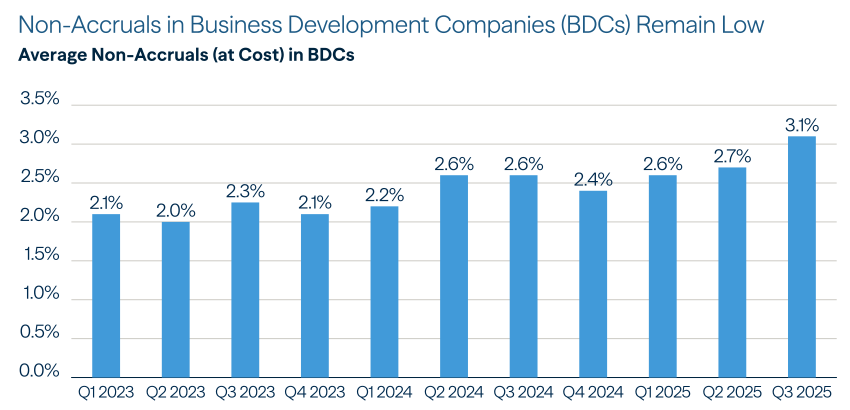
Market fundamentals remain broadly stable, and private credit as an asset class continues to provide a yield premium relative to public debt. Defaults on loans remain near historical averages, and non-accruals—loans with debt 90 days or more overdue—remain low (see below). Moreover, while private credit assets under management have grown at a CAGR of roughly 14% over the past decade, that still represents only about 9% of total corporate borrowing.6
画像
Source: Morgan Stanley. As of September 30, 2025.
Viewing Risks With Nuance
Investors have become concerned about some sections of the private credit market, however, particularly the impact on software lending of advances in AI, as well as broader macro uncertainty. As a result, redemption activity in a number of strategies has increased modestly, and in response, business development companies (BDCs) and other tender offer and interval funds have limited redemptions. But it is important to note that the elevated redemption activity reflects investor sentiment and allocation shifts, not a deterioration in credit fundamentals.
BDCs—frequently used private credit investments—are designed to help balance investor liquidity needs with the illiquid nature of the underlying assets. These structures are intended to protect long-term investors and preserve portfolio integrity, rather than force asset sales when redemptions occur. That’s why semi-liquid structures like BDCs are designed to better align investor liquidity with underlying assets.
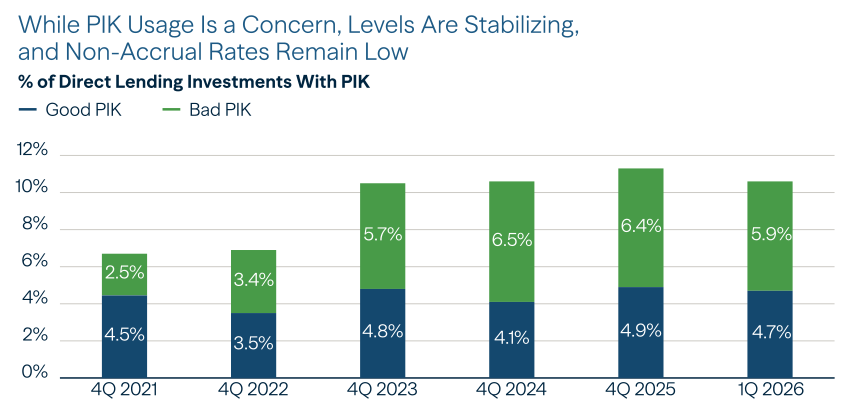
To be sure, as with any investment products, there are always risks to consider when investing in private credit, and the current environment is no exception. While PIK activity—particularly PIK introduced through amendments—can be a sign of credit deterioration, usage has stabilized recently as borrowers’ ability to pay cash interest is improving. (see below).
画像
PIK data reflects Lincoln International’s Senior Debt Index universe.
Source: Lincoln International, Morgan Stanley. As of March 31, 2026.
In addition, market stress has been more pronounced among smaller and middle-market borrowers, particularly companies in the $25–50 million EBITDA range, while larger issuers have generally remained more stable.7
Outlook Themes
Going forward, we believe the fundamentals of the private credit market remain sound, although there are still risks that investors need to navigate. With that in mind, we see four key themes driving the private credit outlook over the next few months:
1. Dispersion is key. We believe there will be increased dispersion among private credit manager returns. To put it simply, this is a credit pickers’ market.
2. Yields remain attractive. The private credit premium—in other words, the return relative to public credit investments—has compressed in recent months, but it has not disappeared. Yields remain compelling relative to public markets.
3. Selection-driven returns. Looking forward, we believe performance will increasingly depend on a strong focus on borrower quality, underwriting discipline, and the structuring and sourcing of loans. Direct lending is and remains a core allocation of investors’ fixed-income portfolios, but sustained performance will come from lenders that emphasize selectivity and disciplined underwriting, with a focus on risk mitigation.
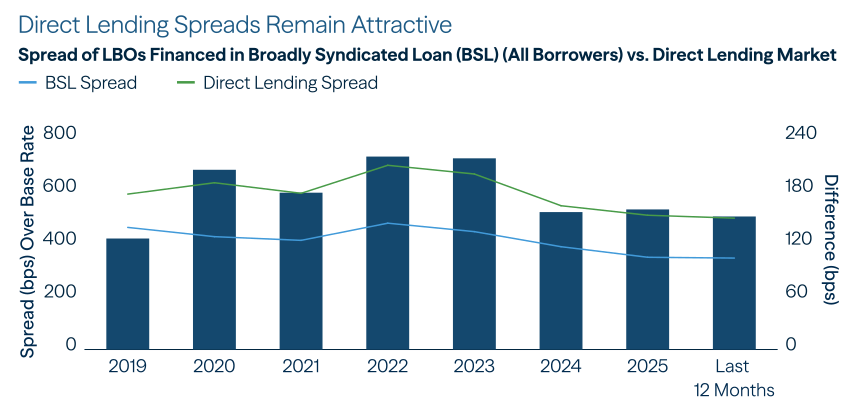
4. Opportunities are emerging. One of the inevitable consequences of a market dislocation is that it creates opportunities in distressed assets, and this is no exception. This is particularly evident in sector-specific areas that have borne the brunt of negative sentiment, but is also a result of refinancing pressure. More than $1.3 trillion in loans are maturing in 2026; public markets are likely to absorb much of this volume, but may be less receptive to more complex credit situations, creating opportunities for private lenders (see below).8
画像
Past performance is not indicative of future results. Direct lending spread data reflects senior secured first-lien loans and unitranche facilities. A unitranche facility is typically a single tranche term loan with a blend of senior and junior tiers of debt tranches. BSL data reflect loans issued to all leveraged borrowers.
Source: PitchBook LCD. As of April 30, 2026.
The Bottom Line
We believe private credit continues to provide significant benefits for investors, including diversification, steady income and returns driven by disciplined underwriting and structuring. In our view, the current private credit environment reflects cycle normalization, not systemic risk, and is functioning as intended. In short, we believe private credit is becoming more selective, not less attractive.
How Private Equity Adapts to a Disrupted World
KEY POINTS
- Trade, supply chain and cost shocks are widening the gap between businesses. This is increasing the gap between those that can adapt and those that cannot
- Market tailwinds are less reliable. With borrowing costs higher and valuations offering less room for upside, returns are more likely to come from earnings growth—not from the market
- Operational improvements are more important than ever. Pricing, cost control and efficiency can help protect margins and create value as conditions become less predictable
- Resilient businesses stand out. Companies with essential demand, pricing power and clear opportunities to improve operations may be better positioned to navigate disruption
A Fluid Environment
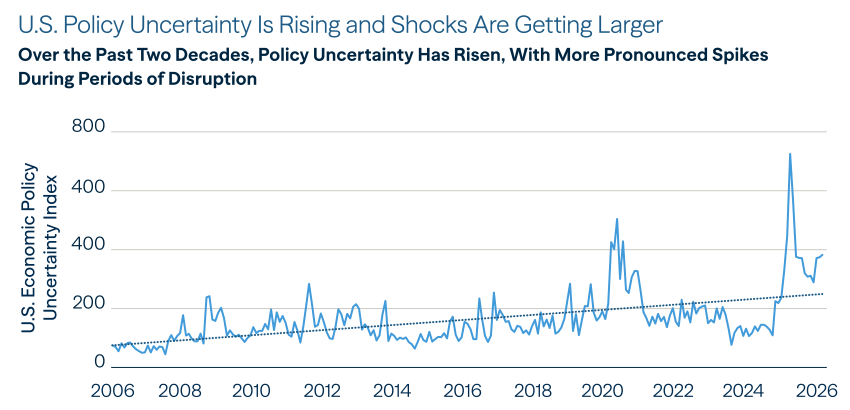
The backdrop for private equity has shifted. Recent years have been marked by trade tensions, supply chain disruptions and swings in input costs. These forces are not constant—but when they occur, they tend to be larger and more disruptive than in the past. Recent shocks have reached levels well above prior periods (see below).
For private equity investors, the implication is clear: The focus has shifted from trying to predict the economy to owning businesses that can perform when costs rise and conditions become less predictable. As a result, the gap between businesses that can adapt and those that cannot is widening.
画像
Source: Federal Reserve Bank of St. Louis, as of March 31, 2026.
Why the Playbook Is Changing
In the post–global financial crisis low-rate environment, private equity often benefited from falling interest rates, ample leverage and rising valuations. That environment made it easier to generate strong returns, even without significant operational change.
Today, those tailwinds are less reliable and available. Bain & Company estimates that achieving a typical return now requires roughly double the level of annual EBITDA growth compared with a decade ago (see below). In practical terms, more of the return must come from improving the business itself—not from favorable market conditions. This raises the bar for value creation.
画像
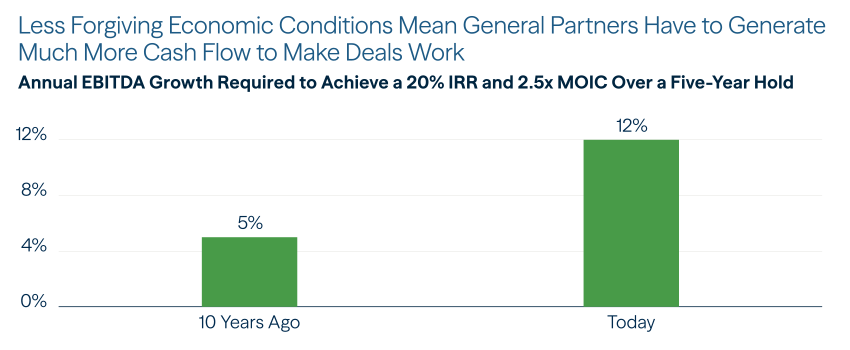
IRR represents internal rate of return, a metric that is typically used to estimate the profitability of potential investments. MOIC represents multiple on invested capital, a metric that describes the value or performance of an investment relative to its initial cost.
Source: Bain & Company, as of February 2026.
From Market Tailwinds to Operational Control
As a result of the evolving market environment, operational improvement is becoming more central to value creation. Pricing, cost discipline, productivity and working-capital management are areas where management teams can take direct action to influence outcomes.
A recent survey of senior private equity operators, primarily C-suite executives and partners in industrials and business services, shows a clear move toward operational levers (see below). A large majority expect operational improvements to become more important over the next 12 months, while far fewer expect gains from financial engineering or multiple expansion. In other words, value creation is increasingly being driven by actions inside the business. These characteristics can help businesses maintain margins even as conditions change.
画像
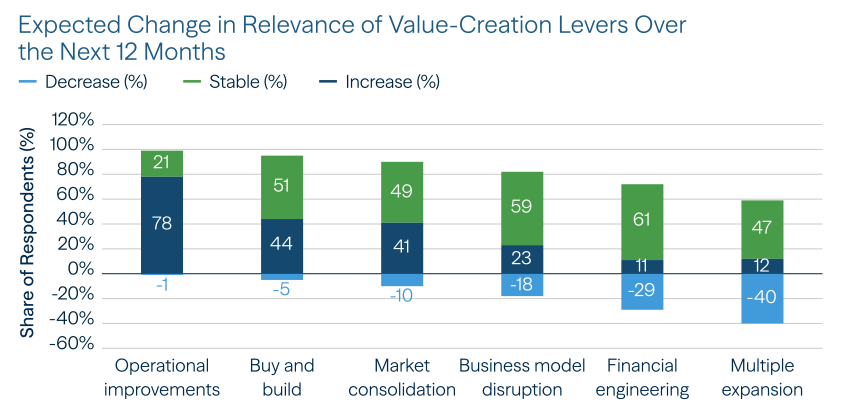
Source: Simon-Kucher, Private Equity Value Creation Study 2025 (n=114). Survey question was related to the impact of different value-creation drivers on equity stories over the past 12–24 months and the expected change in relevance of these factors over the next 12 months.
Where This Matters Most
A heightened focus on operational improvements and margin expansion tends to favor companies with
- Essential, mission-critical products or services
- A recurring revenue base and embedded customer relationships
- Clear opportunities to improve operations and enhance cash flow
These characteristics are often found in market-leading industrial and business services sectors, where demand is less discretionary and operational improvements can be implemented over time.
The key is not to avoid exposure to change, but to invest in businesses that can adapt to it.
The Bottom Line
Successful private equity investments have always relied on improving businesses. What has changed is how central that improvement has become. In a world of larger shocks, returns are less likely to be driven by market conditions and more likely to come from what can be controlled. As dispersion increases, the ability to identify and improve resilient businesses may become more valuable—and more difficult to replicate.
Why Volatility Can Create Opportunities for Disciplined Infrastructure Investors
KEY POINTS
- Infrastructure has historically delivered stable performance with lower volatility than equities during major market disruptions
- Infrastructure’s features make it a compelling option for long-term, risk-adjusted returns in today’s macro environment
- Rapid growth in energy demand—driven by digitalization, AI and electrification—requires a diversified mix of energy sources, creating significant long-term investment opportunities
- Accessing opportunities requires expertise, global scale, local market knowledge and disciplined capital allocation
Historically Low Volatility
Recent history has seen its share of market volatility episodes—the 2008 global financial crisis, the 2013 “taper tantrum” and the COVID era in 2020, as well as other periods of market turbulence. Throughout, infrastructure investing has offered stability, steady performance and low volatility relative to broader equity markets (see below).
Infrastructure’s historically low volatility may be particularly attractive in the current environment, which has been defined by low real yields, persistent inflationary pressure and geopolitical turmoil. Investors with medium- to long-term risk-adjusted return targets may find it increasingly difficult to meet their performance goals in traditional asset classes.
画像
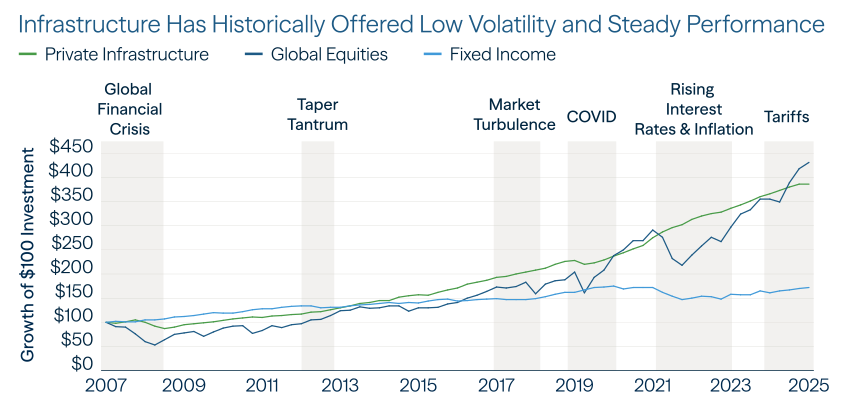
Performance data quoted represent past performance; past/prior performance does not guarantee, and is not indicative of, future results.
Private Infrastructure represented by Preqin Infrastructure Index, Global Equities by MSCI World Index and Fixed Income by Bloomberg Global Aggregate Bond Index. Preqin Infrastructure Index data as of September 30, 2025, due to latest data available. See disclosures for full index definitions. The indexes are unmanaged and cannot be purchased directly by investors. Index performance is shown for illustrative purposes only and does not predict or depict the performance of any investment. There may be limitations to the data provided given limited coverage, reporting lag and different valuation methodologies. Further, private infrastructure funds that are included in the index choose to self-report. Thus, the index is not representative of the entire private infrastructure universe and may be skewed toward those
funds that generally have higher performance. Over time, funds included and excluded based on performance may result in a “survivorship bias” that can result in a further misrepresentation of performance. Please see disclosures for additional information.
Source: Bloomberg, MSCI, Preqin. As of December 31, 2025, unless otherwise noted.
Infrastructure provides an alternative. We believe real assets stand out as an essential part of an investment portfolio in this evolving environment. Infrastructure investments can offer inflation-linked cash flows backed by hard assets that help protect real returns.
Capturing the Opportunity
Delivering the opportunities presented by infrastructure is not easy. It takes the right investment approach to identify promising infrastructure projects based on solid long-term fundamentals that can weather market disruptions.
In our view, a manager with sophisticated operational and development capabilities, as well as a diverse portfolio across technologies and geographies, should be well positioned to deliver attractive returns and long-term value.
To illustrate this point, let’s look at the energy sector. Energy is a fundamental building block for delivering economic and digital growth. It powers our day-to-day lives.
Electricity demand is surging, with global power generation more than doubling since 2000 (see below). This growth is driven by three main avenues: 1) digitalization, with the advent of artificial intelligence; 2) the growth of electrification for transportation; and 3) industrialization, in particular, industrial electrification.
画像
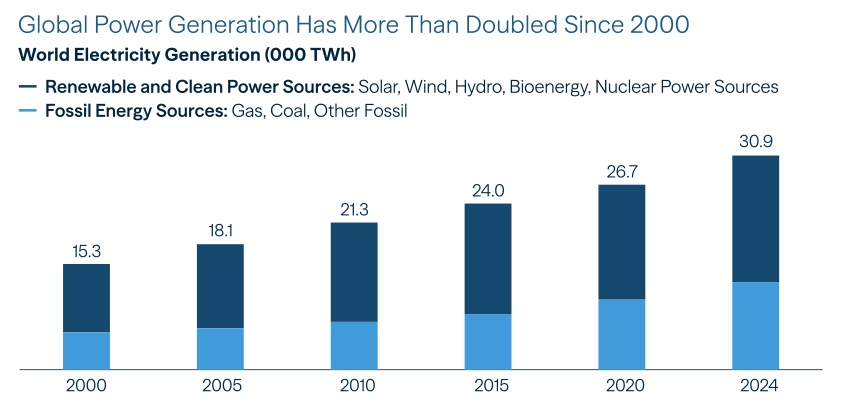
Source: Ember, Global Electricity Review, April 2025.
No single energy technology can meet this growing demand. Renewable energy sources are among the lowest-cost solutions, but global power needs are increasing faster than renewable technology can be put in place. For governments and other entities buying power, a successful strategy will need to include a range of energy assets, including renewables, as well as battery storage solutions to store renewable energy, nuclear, natural gas, and additional alternative clean technologies.
Each technology individually can’t meet the growing demand, but the right mix of an “any and all” energy solution can offer a potential balance of cost and reliability for the grid. For investors, a diversified portfolio of energy assets can help hedge geopolitical and macroeconomic risk while capturing potential higher long-term returns.
For infrastructure investors, a disciplined approach to capital allocation is increasingly important, particularly with energy. Generating returns in such an environment requires a focus on securing long-term contracts backed by creditworthy counterparties and delivering technologies that stand to win on the fundamentals. These are, of course, the same rules that define success in other forms of infrastructure investing, but the energy sector demands unique discipline and expertise at a time of fast-paced demand, uncertainty and complexity in energy markets.
The Bottom Line
The demand we will witness over the next decade for infrastructure will be tremendous, but such a transformational market shift comes with the risk of potentially making poor capital-allocation decisions.
Mitigating that risk means maintaining a focus on the core principles of any good investment strategy. That includes maintaining a long-term horizon, exercising rigorous due diligence, and recognizing complexity at every stage. Moreover, sound risk management involves hedging project costs against revenues, locking in long-term contracts with strong counterparties and diversifying to be able to pivot to regions of the world with attractive risk-adjusted returns.
Capitalizing on opportunities in infrastructure requires more than capital. Equally if not more critical are the operational capabilities behind the investment. These include a global procurement team that can negotiate in different regions—and with scale—making it better positioned to protect against supply chain disruptions. Deep local expertise and strong operating teams are also essential to navigate regulatory frameworks, supply chain challenges and geopolitical uncertainty—and drive value, wherever the winds may shift.
Real Estate Recovery: Resilience Amid Volatility
KEY POINTS
- Private real estate appears attractive and likely to maintain its recent momentum, despite recent market volatility
- Normalizing deal flow, improving valuations and stabilizing cap rates support this momentum
- Historically, real estate has exhibited resilience characteristics including low correlations, steady income and inflation-hedging properties that support an attractive outlook
Three Factors Are Driving Momentum
Private real estate continues to gain momentum, a trend that began in 2024, despite persistent equity market volatility. In fact, it reinforces a historical trend: Private real estate historically has exhibited significantly less volatility than public equity markets during market downturns (see below).
画像
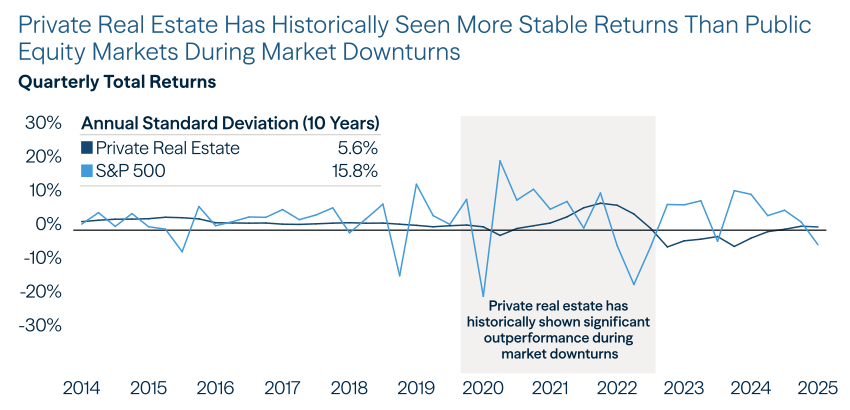
Past performance is not a reliable indicator of future results. Historical data are provided for illustrative purposes only, and outcomes may vary. Indexes are unmanaged and not available for direct investment. Represents quarterly returns for each index, and 10-year, annualized standard deviations. Private Real Estate represented by the NCREIF Fund Index–Open End Diversified Core Equity (NFI-ODCE). U.S. Equities represented by S&P 500 Index.
Source: Bloomberg, National Council of Real Estate Investment Fiduciaries, S&P. As of March 31, 2025.
Three factors are driving private real estate’s momentum:
1. Deal flow is normalizing. In 2025, total transaction volume rose to $354 billion—the highest level since 2022. This is a sign of investor confidence returning to the commercial real estate market (see below).
画像
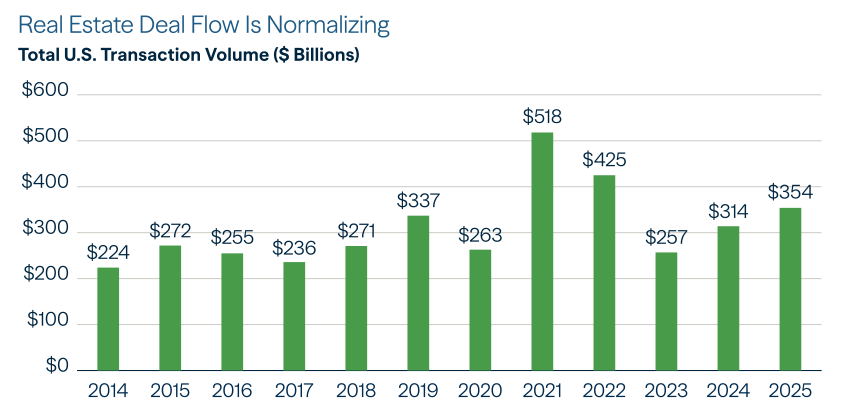
Source: Green Street, as of March 2026.
2. Valuations have stabilized. Renewed deal activity has contributed to stable valuations, which continued to rise in 2025, and were up 7.4% from a trough in late 2023 (see below).
画像
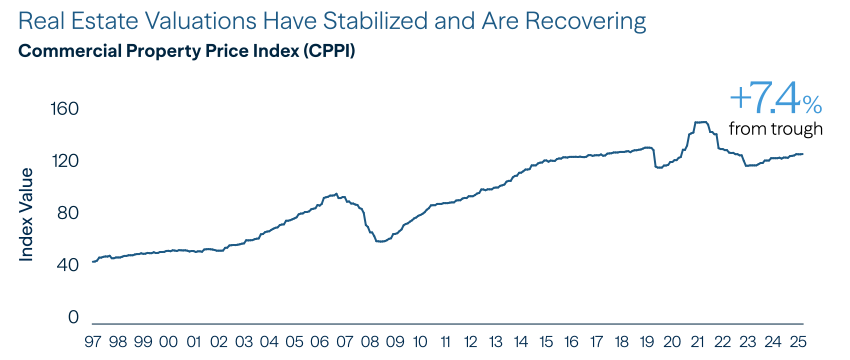
Source: Green Street, as of March 2026.
3. Cap rates have stabilized. Cap rates have stabilized as well, influenced by the recent drop in interest rates (see below). If rates continue to move lower, that should potentially push cap rates to lower levels, and in turn, lower implied risk. In the meantime, there are still attractive opportunities to acquire properties that have stable current income profiles at discounted valuations.
画像
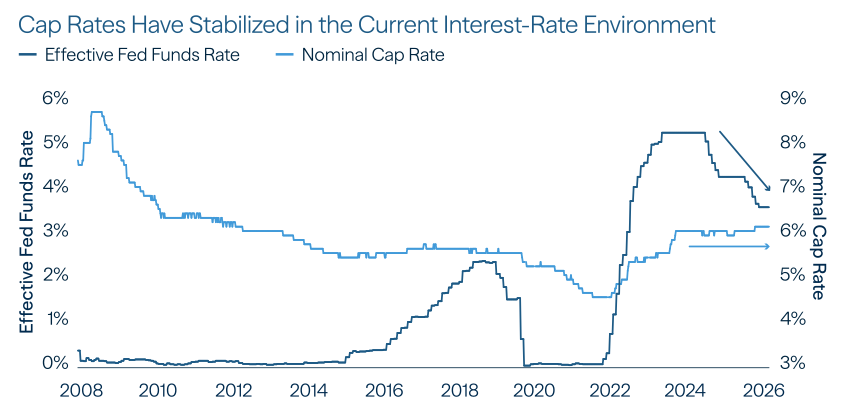
Source: Federal Reserve Bank of St. Louis, Green Street, as of March 2026.
Outlook for the Rest of the Year
We believe that real estate will continue its momentum and perform well this year, despite the headwinds created by greater market volatility. Private real estate has resilient characteristics that potentially can provide a cushion during turbulent markets. These include:
- Lower correlations. Private real estate historically has shown lower correlations with public equity markets, which offers diversification benefits and helps result in lower volatility than the stock market.
- Income-driven returns. Even if capital appreciation slows, private real estate has historically generated consistent cash flows, particularly in sectors like industrial or residential real estate, which tend to be less sensitive to economic downturns.
- Inflation hedge. Real estate values and rents often rise with inflation, offering protection against rising costs.
- Value reset opportunities. Although valuations are improving, they are still below recent peaks. In addition, replacement costs for real estate remain elevated due to higher building costs. Thus, we still see attractive investment opportunities with strong underlying sector fundamentals.
- Long-term focus. While short-term market noise may give investors pause, the long-term value opportunity of real estate can offer stability for the long run.
The Bottom Line
Private real estate’s historical resilience during periods of market turmoil underscores why many investors are seeking to increase their allocation to the asset class. Stable, long-term, value-add real estate investment strategies are attractive for helping investors meet their investing goals by strengthening their portfolios over the long term—and these strategies can provide a cushion during shorter-term volatility.
Read More in our Alts Quarterly Q2 2026.
脚注
1. 米国エネルギー情報局、2026年4月7日時点。
2. プレキン、2026年3月31日。
3. プレキン、「Infrastructure in 2026」、2025年12月14日時点。
4. グリーン・ストリート、2026年3月31日。
リスクに関する記述
資産クラスとして、プライベート・クレジットは多様な債券で構成されています。それぞれのリスク・リターン特性は異なるものの、プライベート(非上場の)クレジット投資では、資金調達の選択肢が限定的な企業へのオポチュニスティックな投資を模索するため、一般的に、上場のものと比較してデフォルトリスクが高くなります。プライベート・クレジット投資では、通常、発行体が投資適格未満または無格付けであるため、より高いリスクの対価として利回りもより高くなります。
不動産関連商品への投資は、不動産の物件価値、賃料、入居率に影響を及ぼす経済、法令、環境の要因から影響を受ける場合があります。
インフラ関連企業への投資は、高い金利負担、高いレバレッジ水準、規制対応コスト、景気減速、供給過剰、競争激化、燃料供給不足および省エネルギー政策など、事業に悪影響を及ぼす可能性のある様々な要因の影響を受ける場合があります。また、人工知能(AI)およびその他の新興技術に関連する投資機会には、技術革新の急速な進展、規制環境の不確実性、市場における投機的な動き、ならびに期待される技術的進歩が想定どおりに実現しない可能性など、重大なリスクが伴います。AI関連投資は、価格変動が大きく、投機性の高い投資となる可能性があります。オルタナティブ投資はしばしば投機的であり、高いリスクを伴います。投資家は、投資金額の全てまたは多額を失う可能性があります。ハイイールド債には金利リスクが伴います。金利が上昇すると債券価格は下落します。一般的に、満期が長期になるほど金利リスクに対する感応度が高くなります。利回りは経済状況に伴って変動します。利回りは、投資意思決定に際する検討事項のひとつにすぎません。
当資料に含まれる情報は、投資助言、取引意図もしくは保有銘柄の示唆または投資パフォーマンスの予測ではなく、そのように意図したものではありません。当資料に表示された見解および情報は、いつでも変更される場合があります。ブルックフィールドは、当該見解や情報を更新する責任を負いません。当該情報は信頼できる情報源から取得したものと見なされますが、ブルックフィールドは、その完全性または正確性を保証しません。
当資料で示された意見は、子会社および関連会社を含むブルックフィールドの現在の意見であり、予告なく変更される場合があります。子会社および関連会社を含むブルックフィールドは、当該情報の更新または顧客への変更の通知を行う責任を負いません。当資料に提示されたいかなる見通し、予測またはポートフォリオ保有比率も当資料に示された日付時点のものであり、予告なく変更される場合があります。過去のパフォーマンスは将来のパフォーマンスを示唆するものではなく、投資の価値とそれら投資から得られるインカムは変動することがあります。
将来の見通しに関する記述
当資料は、米国連邦証券法令、具体的に米国1934年証券取引所法(その後の改正を含む)第21E条、そしてカナダ証券法令における意義の範囲内における将来の見通しに関する記述を含む情報やそれらに基づく情報が含まれています将来の見通しに関する記述は、事業戦略や投資戦略もしくは戦略遂行のための措置、競争力、目標、事業の拡大および成長、計画、見込み、将来の成功への言及など、将来の行動、事象または動向に関して、過去の事実の記述以外のすべての記述を含みます。これらの記述は、過去または現在の事実に厳格に関連しないという事実によって特定することができます。
「予測」、「推定」、「期待」、「予想」、「想定」、「計画」、「考え」やその他の類似する用語は、これらの将来の見通しに関する記述を特定するために用いられます。将来の見通しに関する記述は、不正確な仮定や既知もしくは未知のリスクおよび不確実性によって影響を受ける可能性があります。そうした要素の多くは、将来の実際の結果や成果を決定する上で重要となります。そのため、いかなる将来の見通しに関する記述についても保証はありません。
実際の結果や成果は大きく異なることがあります。これらの不確実性を踏まえ、これらの将来の見通しに関する記述に不当に依拠するべきではありません。それらは、ブルックフィールド·コーポレーションとその関係会社(総称して「ブルックフィールド」)が設定するいかなる商品に適用される条件の概要の提供を目的としたものではありません。情報および見解は予告なく変更される場合があります。当資料で提供される情報の一部は、ブルックフィールドの内部調査に基づいて作成されており、一定の情報はブルックフィールドによる様々な仮定に基づいており、いずれの仮定も正確とは限りません。ブルックフィールドは、当資料に含まれる情報(第三者から提供される情報を含む)の正確性または完全性を必ずしも検証しておらず(そして検証する義務を負わず)、いかなる情報についても検証されたものとしてブルックフィールドに依拠することはできません。当資料で提供された情報は、当資料作成時点におけるブルックフィールドの視点および信念を反映しています。
インデックス·プロバイダーに関する免責事項
当資料内で引用されたインデックスは運用されておらず、投資家がインデックスに直接投資することはできません。インデックスのパフォーマンスは例示のみを目的として記載されており、いかなる投資のパフォーマンスも予測または表示するものではありません。当該比較に関連して、記載されたインデックスとブルックフィールドの戦略、コンポジットまたはファンドへの投資との間には、ボラティリティや規制上および法律上の制約の違いなど、重大な要因が存在する可能性があります。ブルックフィールドは、第三者のインデックス·スポンサーからインデックスに関するすべてのデータを取得しており、当該データは正確と考えていますが、その正確性に関していかなる表明も行うものではありません。
ブルックフィールドは、当資料で参照されたインデックスを所有しておらず、その構築または日々の管理に関与していません。当資料に記載されたインデックスの情報は、お客様への情報提供のみを目的としており、ブルックフィールドの運用商品が同様の結果を達成すると暗示または予測するものではありません。当該情報は予告なく変更されることがあります。当資料で参照されたインデックスは、いかなる報酬、費用、販売手数料または税金も控除していません。インデックスに直接投資することはできません。インデックス·スポンサーは、インデックスおよび関連データの「現状のまま」での使用を許可しており、これに関していかなる保証も行わず、インデックスまたはインデックスに含まれる、関連する、もしくはそこから派生するデータの適合性や品質、正確性、適時性、完全性を保証せず、それらの使用に関連して一切の責任を負いません。インデックス·スポンサーは、直接的、間接的、特別、偶発的、懲罰的、結果的またはその他の損害(利益の損失を含む)について一切の責任を負いません。インデックス·スポンサーは、ブルックフィールドまたはそのいかなる運用商品やサービスの後援、是認または推奨も行うものではありません。別段の注記がない限り、全てのインデックスはトータルリターン·インデックスです。
主な用語とインデックスの定義
ブルームバーグ・グローバル総合インデックスは、世界中で取引されている投資適格債券で構成される時価総額加重インデックスです。同インデックスには、市場の債券ユニバースを疑似する政府証券、モーゲージ担保証券、資産担保証券、社債が含まれます。同インデックスを構成する債券の満期は1年以上です。
ブルームバーグ米国社債ハイイールド債インデックスは、米ドル建て固定金利ハイイールド債市場のパフォーマンスを測定する指数です。ムーディーズ、フィッチ、S&Pによる格付けの中間がBa1/BB+/BB+またはそれ以下の場合、ハイイールド債として分類されます。
クリフウォーター·ダイレクト·レンディング·インデックス(CDLI)は、特定の適格性要件を条件として、上場および未上場の両方を含む事業開発会社(BDC)の原資産の資産加重パフォーマンスで表される、米国ミドルマーケット(中堅)企業貸付のレバレッジなし報酬控除前パフォーマンスを測定する指数です。
米国経済政策不確実性指数は、米国の主要10紙(USA Today、Miami Herald、Chicago Tribune、Washington Post、Los Angeles Times、Boston Globe、San Francisco Chronicle、Dallas Morning News、Houston Chronicle、および Wall Street Journal)に掲載された関連記事の出現頻度を指数化したものです。現行指数(1985年以降)の算出にあたっては、各新聞の記事を対象に毎月検索を実施し、経済政策に関する不確実性を示すキーワードの出現頻度を集計しています。検索対象となるキーワードには、「uncertainty(不確実性)」または「uncertain(不確実な)」、「economic(経済)」または「economy(経済)」に加え、「Congress(議会)」、「legislation(法案・立法)」、「White House(ホワイトハウス)」、「regulation(規制)」、「Federal Reserve(連邦準備制度理事会)」、「deficit(財政赤字)」のうち1つ以上が含まれます。
FTSE EPRA Nareit ディベロップト不動産インデックスは、運用されていない時価総額加重トータルリターン·インデックスであり、先進国の上場エクイティ·リートおよび上場不動産企業で構成されています。
FTSEグローバル·コア·インフラストラクチャー50/50インデックスは、市場参加者に業界定義によるインフラの解釈を提供し、一定のインフラ·サブセクターへのエクスポージャーを調整しています。セクター別構成比率は、半年ごとのレビューの一環として、広範な3産業セクターについて、公益事業 50%、7.5% を上限とする線路/鉄道を含む運輸 30%、パイプライン、衛星、電気通信塔を含むその他セクター 20% の比率に従って調整されます。各グループ内の個別銘柄の比率は、投資可能時価総額の割合で調整されます。
グリーン・ストリート商業用不動産価格インデックス(CPPI)は、グリーン・ストリートが公表する時系列インデックスであり、米国の商業用不動産物件の価値に連動します。当インデックスは、オフィス、産業、小売り、および集合住宅など主要なセクター全体の取引価格および機関投資家品質の物件評価に基づいています。長期的な商業用不動産価格の変化を示すベンチマークとして広く使用されています。
ICE BofA BB 米国ハイイールド·インデックスは、米国国内市場で公募発行された、米ドル建て投資適格未満の社債のうち、投資格付け BB 格の銘柄を対象に、パフォーマンスを追跡するインデックスです。
リンカーン・シニア・デット・インデックスは、米国および欧州における175超のファンド顧客が保有する約1,600件のミドルマーケット向けダイレクトレンディング投資を対象に、その公正市場価値を四半期ごとに追跡する指数です。
MSCI ワールド·インデックスは、先進国の株式市場のパフォーマンスを測定するように設計された、浮動株調整後時価総額加重インデックスです。
NFI-ODCE インデックスは、米国の主要なプライベート不動産ファンドの投資収益率(手数料控除前)を測定する指数です。対象となるファンドは、一般的に低リスク、低レバレッジ(負債比率40%未満)、および米国内で分散保有された安定稼働資産を特徴とするコア型投資戦略を採用しています。
プレキン·インフラストラクチャー·インデックスは、プライベート·キャピタル·パートナーシップへの実際の投資額に基づいて、投資家がプライベート·インフラ·ポートフォリオで平均的に獲得したリターンを指数化したものです。各データポイントは、包括的なパフォーマンスデータが保有されているクローズドエンド型ファンドのプールから、四半期開始時点と終了時点の両方で個別に算出されています。
プレキン·プライベート·エクイティ·インデックスは、プライベート·キャピタル·パートナーシップへの実際の投資金額に基づいて、投資家がプライベート·エクイティ·ポートフォリオで平均的に獲得したリターンを指数化したものです。各データポイントは、包括的なパフォーマンスデータが保有されているクローズドエンド型ファンドのプールから、四半期開始時点と終了時点の両方で個別に算出されています。
プレキン·リアル·エステート·インデックスは、プライベート·キャピタル·パートナーシップへの実際の投資金額に基づいて、投資家がプライベート不動産ポートフォリオで平均的に獲得したリターンを指数化したものです。各データポイントは、包括的なパフォーマンスデータが保有されているクローズドエンド型ファンドのプールから、四半期開始時点と終了時点の両方で個別に算出されています。
S&P 500インデックスは、幅広く保有される米国大型株 500社の時価総額加重株価指数です。
