マーケット
オルタナ四半期レポート:逆風と追い風 — 今後の展開を見据えてマーケット / 全般
ブルックフィールド2026年投資見通し
プライベート市場におけるこの象徴的な局面を形成する主要なトレンドや魅力的な投資機会を探ります。
ブルックフィールドCEOブルース・フラットからのメッセージ
変容する世界で変化を主導する
投資家の間では、長期目標の達成においてプライベート資産が果たしうる役割がより広く認識されるようになっており、プライベート市場は成長を続けています。基幹インフラ、再生可能エネルギー、不動産、その他実物資産の事業は、安定性、インフレ耐性、複利成長を通じて持続的な価値を提供するという点を深く理解し始めているのです。
現在、民間資本にとって最も有望な長期投資の機会は、「3つのD」と呼んでいるデジタル化、脱グローバル化、脱炭素化のメガトレンドによるものです。これらは一過性のトレンドではなく、今後数十年にわたり経済構造を変革し、投資需要を牽引する構造的な変革をうけた流れです。こうしたテーマが加速するなか、強靭で複利的なポートフォリオを築く上で引き続き鍵となるのは、世界経済の基盤を形成する実物資産を所有し、開発することです。
短期的な不確実性が残るものの、大型のオルタナティブ投資にとって良好な市場環境が形成されています。2025年における世界の M&A 取引は複数年ぶりの高水準に達し、金利の安定化と堅調な世界経済が、長期キャッシュフローを創出する優良資産への投資妙味を一段と強固にしています。
当社事業全体を通して浮上しているテーマがあります。それは、私たちが何十年にもわたり貫いてきた「規律ある変革」です。足元の投資環境は、オペレーショナル・エクセレンス、効率的な資本リサイクル、そしてファンダメンタルズ重視への回帰が報われる局面へと移行しています。
インフラとエネルギーの分野では、世界的な電力需要の増大に応えるべく投資が加速しており、規模と知見を兼ね備えた当社のような投資家に、新たな投資機会をもたらしています。一方、グローバル不動産では投資スキルと運営に関する専門知識を有する投資家が勝ち組となるでしょう。プライベート・エクイティ(PE)においては、リターン源泉が金融エンジニアリングから企業変革そのものへと明確にシフトしています。そして最後に、クレジット市場では、資産クオリティに基づく厳格なアンダーライティング基準を持つプレイヤーが評価される局面が続くでしょう。
ブルックフィールドにおけるアプローチの中核を成すのは常に強靭性であり、変化の激しい世界における当社の最大の強みです。社会の進歩を支える実物資産への投資は、規律を持ち長期目線で取り組むことで持続的に価値を生み続けます。この確固たる信念は、何十年にもわたりブルックフィールドを導いてきたものであり、2026年以降も変わらず私たちの羅針盤であり続けるでしょう。
コンテンツ
再生可能エネルギー&トランジション|需要増加に応える電力供給の拡大
インフラストラクチャー:成長の加速と構造上の強靭性
2026年におけるインフラの見通しは、かつてないほど強固なものとなっています。数十年にわたり、あらゆる市場サイクルを通じて、安定的かつ着実に成果と成長を提供してきた同セクターは、いまやデジタル化・脱炭素化・脱グローバル化という強力なグローバルトレンドの交差点に位置しています。これらのトレンドを背景に、構造的な投資サイクルが加速するとともに、機関投資家による同資産クラスへのアロケーション拡大に伴って、その投資対象や規模も広がり続けています。こうして流入する資本こそが、世界経済の背骨を形づくるインフラを支える原動力となっています。
2026年の主なテーマ
- デジタル化、脱炭素化、脱グローバル化という複数メガトレンドの同時進行を背景に、インフラのスーパーサイクルが継続しています。これら構造的変化の基盤は強化の一途を辿っています。
- AI とデータ主権の進展が、デジタルインフラおよびコンピュート能力に対する爆発的な需要を生み出しており、これが電力供給や周辺インフラ全体へと波及効果をもたらしています。
- 機関投資家によるアロケーションが拡大している実物資産セクターは、世界最大級の投資サイクルの中心に位置しています。
インフラのスーパーサイクル
インフラの定義は、従来の電力・交通システムを超え、次の世界的な生産性の時代を支えるデジタル・産業エコシステムへと拡大しており、世界のインフラ投資需要は、2040年までに100兆ドルを超える見通しです¹。
2025年、取引活動は活気づき、この勢いは2026年も継続する見込みです。また、規制公益事業から契約型デジタル網まで、多くの資産ではインフレ連動型収益により実質リターンが維持されており、引き続き投資資本を引き寄せています。
AI革命
AI(人工知能)は、かつての電気やインターネットのように、次なる変革的な汎用技術として台頭しています。その影響は経済のあらゆる分野に及び、前例のない規模のインフラ整備を必要とします。汎用人工知能(AGI)は、今後10年間で最大10兆ドル規模の生産性向上をもたらす可能性がありますが、その潜在力を現実のものとするためには、AIバリューチェーン全体で7兆ドル規模のインフラ投資が必要になります²。これに含まれる投資機会としては、データセンター(AIファクトリー)、専用の電源開発、GPUなどのコンピュートインフラ、半導体製造や光ファイバー網などの戦略的な周辺領域などがあります。
AIの登場は、インフラの成長に飛躍的な変化をもたらしました。データセンター、光ファイバー網、電力網に対する需要は、当初の予測をはるかに上回るものとなっています。
デジタルインフラは本質的に資本集約的です。ハイパースケール型データセンターの建設には、1メガワット当たり1,000万ドル超の資金が必要とされ、さらに内部に設置されるコンピュートインフラについては、半導体チップの要件を背景に、1メガワット当たり3,000万ドルを超えるケースもあります。
世界のハイパースケーラーによる設備投資額は、2024年から2025年にかけて50%増加すると予測されていますが、それでもなお不十分です。AIワークロードは、従来型のコンピューティングと比べてラック当たりの消費電力が最大で10倍に達しており、ラック密度の上昇に伴い、今後さらに5〜10倍の増加が見込まれています³。各国政府はかつてない債務水準に直面しており、大手テック企業らは資本力を持つパートナーとの連携を望んでいます。こうした背景から、資本ニーズに応えると同時に需要に見合った不可欠なインフラを提供するための、革新的な資本パートナーシップを構築する好機が広がっています。
画像
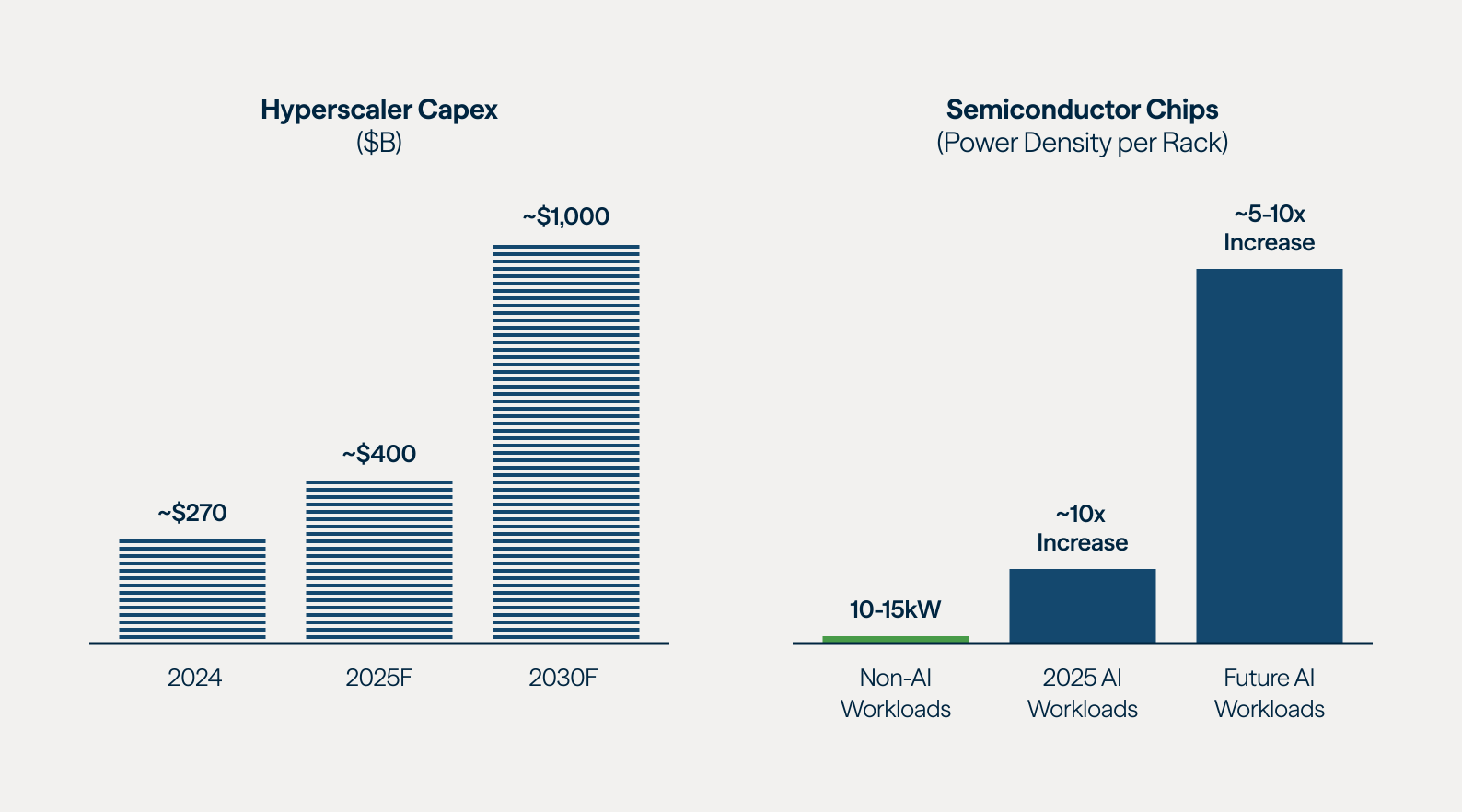
Figure 1: Hyperscaler Capex Soars as Chips Require More Power
Source: Actual 2024 and forecasted 2025 annual capital expenditures for six hyperscale companies, based on publicly available disclosures; IoT Analytics, November 2025; Nvidia, as of August 2025.
Meeting Power Needs
The rise of AI and electrification is intensifying the need to generate and transport energy. Electricity demand is climbing sharply across all regions, driven by both digitalization and the onshoring of manufacturing, while existing transmission infrastructure struggles to keep pace.
More than 70% of global transmission lines are over 25 years old, with interconnection queues for new renewable projects stretching close to a decade.⁴ Analysts estimate that annual grid investment will need to exceed $600 billion by 2030 to replace aging assets,⁵ integrate renewable generation and ensure reliability. Hence, the need to “de-bottleneck” the grid has become a defining investment theme, creating opportunities for large-scale partnerships and private capital solutions across the energy value chain.
We are finding that the strongest opportunities lie in grid modernization and transmission upgrades to relieve interconnection backlogs, alongside utility-led capex programs that offer regulated, inflation-linked returns. An “any-and-all” approach to baseload generation—combining natural gas and nuclear with onshore wind, solar and storage—will be vital to meeting reliability needs. At the same time, behind-the-meter generation for data centers and industrial users is emerging as a key enabler, shortening time-to-power and bypassing grid bottlenecks while linking directly to the digital infra- structure buildout.
Sam Pollock
CEO, Infrastructure
AI is accelerating the need for data centers, fiber networks and modern power infrastructure—creating an entirely new class of investment opportunities.
Resilient Performance
Independent of geopolitical or macroeconomic uncertainty, infrastructure investments are inherently built to weather market cycles. The sector’s resilience stems from its core characteristics: perpetual, long-lived assets with high barriers to entry; contracted or regulated revenue streams that are typically indexed to inflation; and stable, predictable cash yields with low correlation to public markets.
These structural features provide inflation protection and steady performance across environments. While short-term frictions may arise, they do not alter the fundamental trajectory of growth. The essential and enduring nature of infrastructure underpins its strength through periods of cyclical volatility.
画像
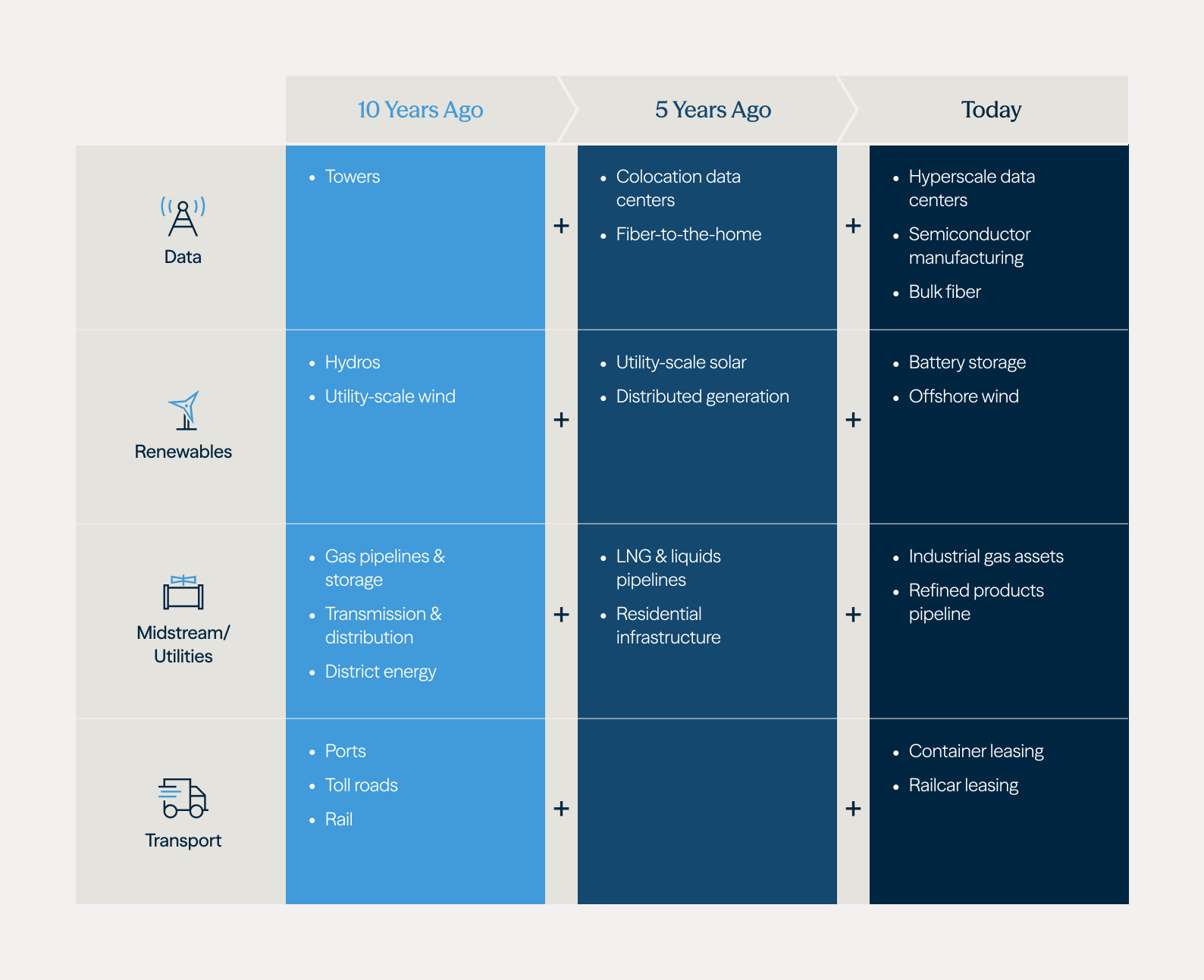
Figure 2: The Evolving Infrastructure Opportunity Set
Building for Global Growth
We believe that supportive financial conditions and accelerating secular themes are positioning the global infrastructure sector for enduring growth. The AI buildout cannot occur without clean, reliable power, grid modernization cannot proceed without private capital, and the reindustrialization of economies cannot succeed without the digital and energy infrastructure to support it. This convergence is creating a once-in-a-generation opportunity for disciplined, long-term investors to fund the physical backbone of the global economy’s next phase (see Figure 2).
Across the power, data and manufacturing eco- systems, the scale of required capital far exceeds what corporates and sovereigns can fund alone. This dynamic is driving a wave of large-scale partnerships, joint ventures and privatizations, as governments and hyperscalers seek off-balance-sheet solutions. These collaborations are enabling the rapid delivery of essential infrastructure—from sovereign compute facilities and AI ecosystems to behind-the-meter generation and next-generation manufacturing capacity.
Taken together, the sector’s resilience, rising allocations and deepening strategic relevance underscore an outlook that has rarely been more constructive. As we enter 2026, it’s clear that the Three Ds are no longer separate megatrends, they are the converging foundation of global growth, defining the opportunity set for the decade ahead.
再生可能エネルギー&トランジション:需要増加に応える電力供給の拡大
電力は、わずか数年のうちに世界的な戦略的優先事項となりました。現在では、政府・企業の双方にとって、成長を妨げるボトルネックとなっています。
2026年の主なテーマ
- 世界の電力需要は、デジタル化、電化、工業化の同時進行を背景に、供給を上回るペースで加速しています。
- 電力はすでに世界経済成長のボトルネックとなっており、戦略的な喫緊の課題です。企業および政府は、エネルギー安全保障と国内供給確保を最優先に位置づけ、再生可能エネルギー、原子力、天然ガスへの投資を拡大すると同時に、電力網インフラの更新を進めています。
- 将来の需要を単一技術で賄うことは現実的ではありません。前例のない需要拡大に対応するには、「あらゆる手段を駆使した」アプローチが不可欠です。具体的には、経済性と導入スピードで先行する再生可能エネルギーを中核に、柔軟性を担う蓄電池、規模と信頼性を提供する原子力、そして安定供給を支える天然ガスを組み合わせていく必要があります。これらの技術を同時並行でスケールさせるには、今後10年、さらにはその先を見据えた大規模かつ継続的な投資が求められます。
今後の経済発展の鍵を握るのはエネルギーであり、製造業からAIに至るまで、ほぼすべての主要な経済機会において最大のボトルネックとなり得る存在です。AIが経済全体にもたらすだろう生産性向上への期待を背景に、エネルギーは、国家および企業の競争力を左右する中核要素となっています。十分な電力が確保できなければ、これらの生産性向上や今後の成長、競争力は損なわれかねません。
再生可能エネルギーのコストは大幅に低下し、風力・太陽光・蓄電池の開発が急速に進んでいるものの、それでも世界の電力システムは急増する需要に追いついていません。天然ガスは、大半の国における重要な解決策の一翼を担いますが、資源面での制約や必要なインフラ不足をうけて、その伸びは限定的となっています。この結果、数多くの国が、需要増に対応しうる安定電源として原子力に再び注目しています。
電力需要の増加に対応するための技術基盤はすでに確立されています。足元の課題は、需要増のペースに合わせて、いかに迅速にそれらの投資・開発を拡大できるかにあり、適切な能力と資本アクセスを備えたプレイヤーにとって、壮大な価値創出の機会が提供されています。
2026年の見通しは、前年と同じファンダメンタルズに基づくものの、投資環境は着実に変化しています。需要の加速により、電力網に対してスケールのあるエネルギー供給を実現できる事業者の投資機会は拡大しており、新規設備投資ではコスト、供給までのスピード、エネルギー安全保障が中核的な優先事項となっています。
「あらゆる手段を駆使した」電力ソリューションに対するニーズを反映し、世界の電力投資額は2025年に3.3兆ドルに達すると見込まれており、その6割超が再生可能エネルギー、蓄電、送電網の最適化に向かう見通しです4。
Fundamentally, we have all the technologies we need to meet increasing power demand. The constraint today is scaling investment and development fast enough to meet this demand.
Connor Teskey
CEO, Renewable Power & Transition
While our 2026 view is anchored in the same fundamentals that defined last year’s outlook, the investment landscape has evolved in important ways. Demand is accelerating, increasing the opportunity for those that can provide scale energy solutions to global grids, with cost, speed to market and energy security being the key priorities when investing in new energy capacity.
画像
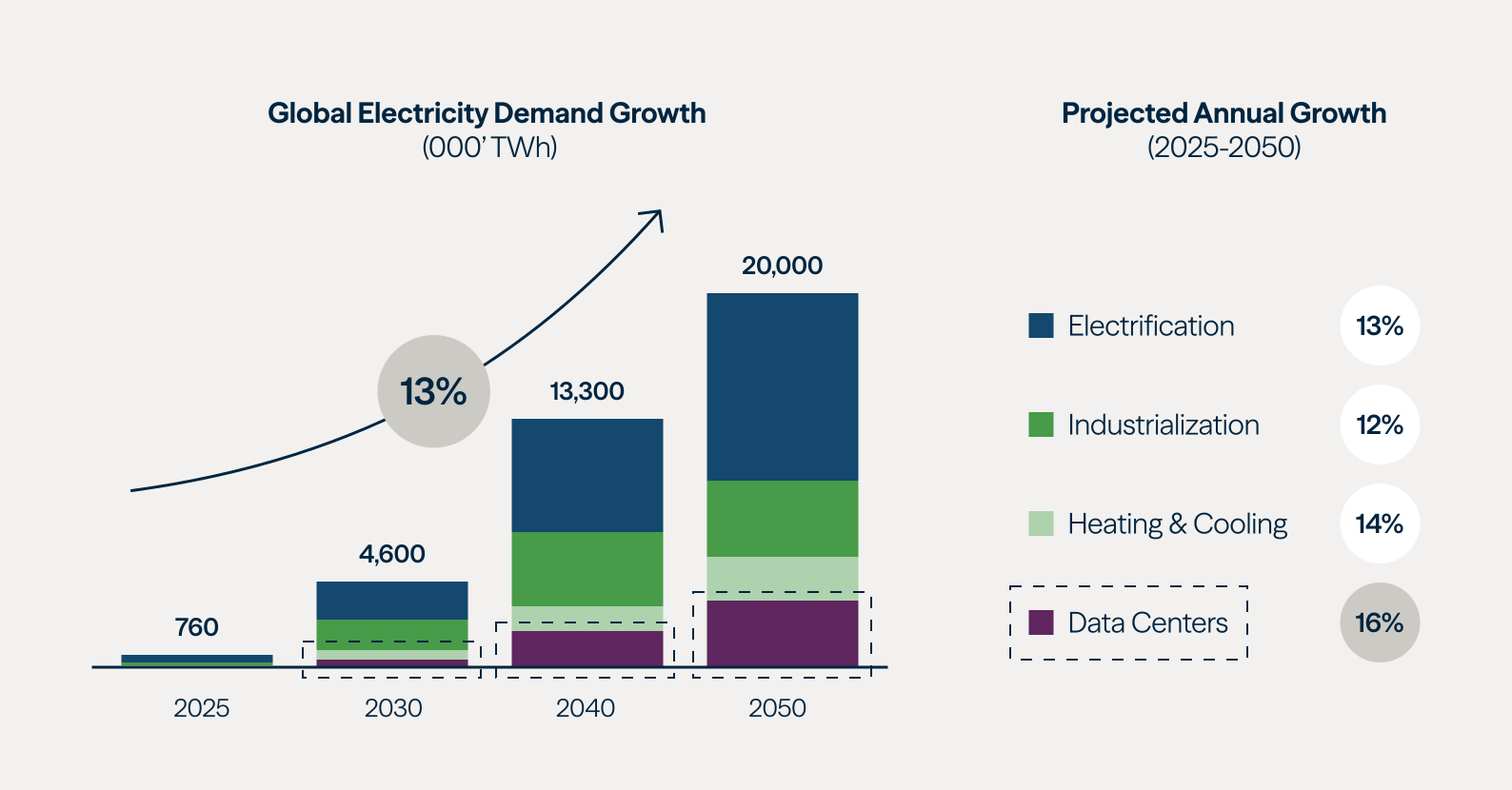
Figure 3: Data Centers Are the Fastest-Growing Demand Driver
Source: BloombergNEF
Reflecting the world’s need for “any-and-all” energy solutions, global power investment is expected to reach $3.3 trillion in 2025, with over 60% directed toward renewables, storage and grid optimization.⁶
Energy Is a Clear Strategic Priority
Energy demand is shaped by three powerful forces: deglobalization, as nations pursue energy independence; digitalization, as AI and data storage increase demand for reliable power; and decarbonization, as industries electrify and invest for sustainable growth. Each is accelerating towards the same outcome: delivering low-cost, reliable and scale energy, faster than ever before.
To achieve growth and partake in the evolving economy, governments and corporates are onshoring critical supply chains and investing significantly in domestic energy sources. In particular, economic drivers are reinforcing investment in low-carbon energy systems because they deliver the most affordable and secure power. The world’s largest corporations are seeking to procure low-cost, quick-to-market and scalable power to ensure their competitiveness and continue to partner with energy suppliers directly, reducing reliance on grids and utilities as intermediaries. We expect this dynamic to continue in 2026 and well into the next decade.
Four hyperscalers—Amazon, Google, Microsoft and Meta—now account for nearly 90% of global clean energy contracting for data centers.
Connor Teskey
CEO, Renewable Power & Transition
Hungry for Power
The most significant development of the past few years is the surge in electricity demand driven by digitalization and the rapid adoption of AI.
The data center buildout is the fastest growing source of electricity demand and will transform global power needs (see Figure 3). The forecasts struggle to keep up: BloombergNEF now projects
U.S. data center power demand to reach 106 GW by 2035, a 36% jump from its forecast just seven months before.⁷ Four hyperscalers—Amazon, Google, Microsoft and Meta—now account for around 90% of global clean energy contracting for data centers.⁸ At Brookfield, we have seen our contracting to these businesses double in less than two years and expect electricity demand forecasts to keep rising.
And while data centers are the fastest-growing source of demand, broad-based electrification and industrialization are the largest volume drivers, at over 70% of demand growth until 2050.⁹ The reindustrialization of the world’s largest economies, the electrification of major sectors—such as industrials and transportation—and the urbanization across emerging markets are creating sustained demand growth for generation capacity that will last for decades to come.
The need for power is particularly acute in the emerging markets. These economies are industrializing at an unprecedented pace, and energy security has become a national imperative. Despite the fact that emerging markets (outside China) are seeing some of the fastest growth in electricity demand, today they only receive an estimated 20% of total annual investment in the power sector.¹⁰ Here, the cost advantage of renewables provides a durable foundation for growth independent of subsidies or short-term policy shifts.
“Any-and-All” Solutions
Corporates and governments are now converging around the same objective: securing affordable, clean and reliable power at scale and quickly. Only a diverse, “any-and-all” energy solution—scaled with private investment—can power the global economy in the years ahead.
Renewables lead on cost and speed
Renewables remain the lowest-cost source of new electricity and the fastest to deploy and scale. Solar and wind projects anchor new-build pipelines, sup- ported by long-term, inflation-linked corporate and utility offtake agreements.
We believe renewables will continue to represent the largest share of new capacity additions in 2026 and beyond. The International Energy Agency (IEA) forecasts solar and wind to provide almost 20% of global electricity by 2026, a nearly fivefold increase from a decade ago.¹¹ Between now and 2030, it expects renewable power capacity to double.
Recent headlines suggest a potential slowdown for renewable investment, driven by changing policy priorities; in reality, the fundamental advantages of these technologies—and energy demand growth from corporates—are driving increasing investment, with no sign of abating. In fact, that dynamic is most significant in the U.S., where we are seeing the greatest ever demand for renewables despite recent policy changes.
Some projects and businesses have been affected by changing U.S. policy over the past year. But for those like Brookfield with a disciplined approach, access to scale capital and high-quality projects, the opportunity is growing. Many of the largest and most capable businesses have safe-harbored projects securing tax credits through to the end of the decade, maintaining underwritten returns. Even when these credits are phased out, renewable technologies will continue to stand on their own given their economic advantages: speed to market and energy security.
Storage enables round-the-clock clean power
Batteries are now central to meeting energy demand as they transform wind and solar into round-the- clock power solutions and provide increased reliability. Costs fell by roughly 95% since 2016,¹² enabling large-scale deployment alongside renewables and traditional thermal technologies.
In addition to enabling the supply of 24/7 clean energy, batteries provide critical grid stabilizing services when growing loads and a shifting energy mix have resulted in congestion and intermittency. We expect investment in grid-connected storage to continue to increase in 2026 as a solution to these challenges and, in particular, note that colocated solar-plus-storage developments are emerging as a preferred model for new capacity. In the U.S., over half of the utility-scale storage coming online by 2026 is paired with solar.¹³
By 2030, global demand for batteries is now expected to be double what anyone thought possible just a few years ago, reflecting the improving economics and evolving needs of the grid (see Figure 4).
Nuclear returns to the mainstream
Nuclear energy is a critical source of scale, carbon-free baseload power, and governments around the world are increasingly looking to it as they form their energy strategies and policies. The U.S. government has made it a strategic priority to start construction on 10 new reactors by 2030¹⁴ and recently announced it would invest a minimum of $80 billion to kickstart this program with Westinghouse—a nuclear technology leader owned by Brookfield since 2017. The U.K., Poland, Czechia and Bulgaria, to name a few, are building new reactors, and around the world countries are extending the life of their currently operating fleet and restarting non-operational reactors. This renewed focus is, in turn, driving supportive regulation and improved capital access, which is expected to continue reviving investment interest.
Our view is that over the coming decades, hundreds of gigawatts of new nuclear capacity will need to be deployed. Through Westinghouse, we are witnessing a step change in the nuclear reactor buildout that exceeds anything seen this century, creating investment opportunities not only in the construction of new generating plants, but also in securing the decades-long fuel and servicing requirements for those reactors.
画像
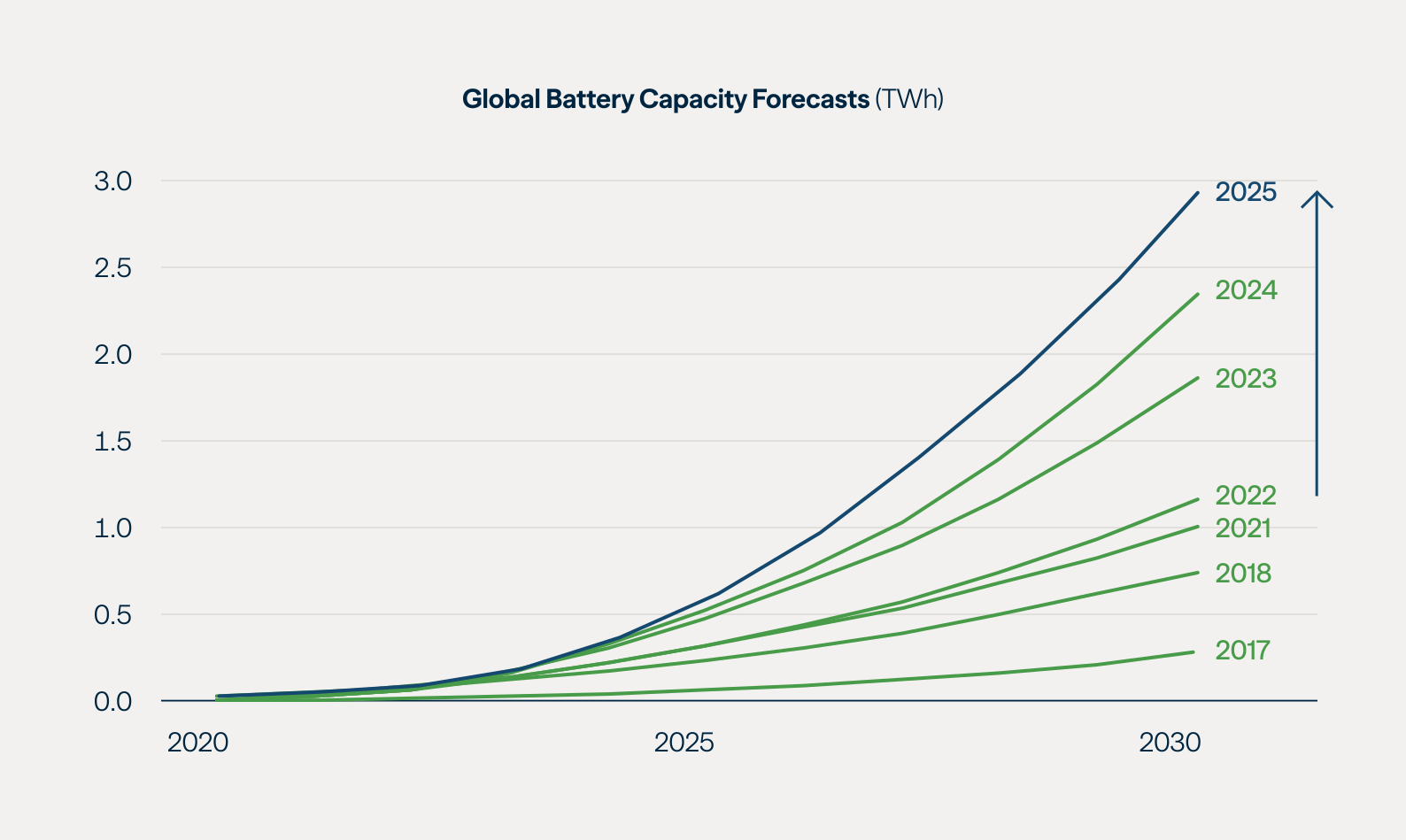
Figure 4: Batteries Have Become the Cornerstone of Power Systems
Source: BloombergNEF.
Gas + carbon capture as critical balancers
Natural gas continues to play a critical role in meeting energy demand and stabilizing grids. While we see vast demands for power driving a resurgence of nuclear, we are observing similar trends in gas, especially in markets that have an abundance of this natural resource domestically.
What’s more, carbon capture and storage (CCS) is increasingly economic and can be paired with gas to provide cleaner, more reliable and flexible energy solutions. Projects such as Entropy’s Glacier CCS facility, the world’s first decarbonized gas plant through carbon capture,¹⁵ further demonstrate commercial viability of CCS and help solidify the position of natural gas as a transitional yet indispensable power source.
Other decarbonization technologies expand the toolkit
Beyond power generation, a new wave of decarbonization technologies is emerging for sectors that are difficult to electrify. eFuels—including sustainable aviation fuel and other biofuels produced from captured carbon dioxide and green hydrogen—offer pathways to cut emissions from aviation, shipping and long-haul transport. Brookfield’s investment in an eFuels project with Infinium—supplying low-car- bon fuel to airlines and logistics customers— demonstrates how these solutions are moving to commercial scale. Green hydrogen and advanced recycling technologies are also helping heavy industry reduce emissions where high temperature heat and complex feedstocks are involved. Together, these technologies complement renewables and storage and expand the toolkit for decarbonizing hard-to-abate sectors.
Managing grid limitations
Utilities and grid operators are planning significant levels of transmission investment. In 2024 alone, a record $390 billion was invested to ensure that grids could manage additional power.¹⁶ However, we expect grid connection to remain one of the biggest obstacles to meeting demand. This should contribute to continued growth in batteries, which reduce grid congestion, and distributed generation, which can add capacity without relying on the grid.
Looking Ahead
The future needs an “any-and-all” approach to energy investment. The forecast demand is too high, and the existing technologies too established, for there to be a zero-sum or winner-takes-all out- come. Investors who work with governments and corporates to deliver diversified energy solutions are poised to best capitalize on this dynamic.
Disciplined capital allocation is increasingly import- ant, as generating returns in such an environment requires adherence to the same rules that define success in other forms of infrastructure investing— focusing on securing long-term contracts backed by creditworthy counterparties and delivering technologies that stand to win on the fundamentals. Similar to previous growth periods, as policy incentives normalize and competition intensifies, those attributes will separate durable value creation from cyclical growth.
In this environment, we see an opportunity for disciplined and experienced operators to capture significant value by enabling the largest energy buildout in history.
プライベート・エクイティ:回復力、リセット、そして再興
逆風を乗り越えたPE業界に、追い風とメガトレンドが活力をもたらしています。私たちにとって、これからの一年は「回復力」「再編」「再興」の三語に集約されます。この新たな時代において、リターンを牽引する最大要因は運営の専門性です。
2026年の主なテーマ
- 金利の正常化、企業の合理化、そして長期保有され過ぎたポートフォリオが割安になっていることを背景に、取引活動が加速しています。
- 急速な拡大期を経て再編局面を迎える中で、投資機会は規模と規律を備えたマネージャーに向かうと予想されます。
- 脱グローバル化やAI革命をはじめとするデジタル化が生産性向上を促すなか、運営変革を要するインダストリアル企業が大きな投資機会となります。
回復力
プライベート市場の案件取引は回復基調にあり、第2四半期の一時的な関税措置による混乱があったにもかかわらず、2025年上期は、バイアウト取引が明確に持ち直しています。案件規模は2021~22年のピーク後に大きく縮小しましたが、現在はより正常化した水準に回帰し、2018~19年の水準を上回っています。
過去10年にわたり拡大してきた取引マルチプルは、この5年間おおむね横ばいで推移しており、本格的な調整局面には至っていません。一方で、業界全体としては資産のマネタイゼーションに課題を抱えています。バイアウト資金の約3分の1が投資後4年以上経過しており、未実現ポートフォリオ価値は世界全体で約3.5兆ドル規模に達しています。
こうした状況に加え、米国と欧州で追加利下げの可能性があることも相まって、2026年には案件取引の活発化が見込まれます。ポートフォリオは、いつまでも長く持ち続けられるわけがなく、いずれは取引を行わざるを得なくなるのです。
リセット
過去10年にわたり、低コストのレバレッジを活用した買収と、市場成長やマルチプル拡大の追い風を受けて、PE業界は急成長を遂げてきました。しかし、利益率の改善を伴わないこの成長トレンドは持続可能なものではありませんでした。数年前に高いバリュエーションで資産を取得した多くのマネージャーは現在、評価額が取得価格を下回る資産を抱えざるを得ない状況に直面しており、質の高い資産を割安に取得する機会が提供されています。
また、GP(ジェネラル・パートナー)の数は過去10年で急増し、市場は再調整の局面を迎えています。PE企業の数も、資本調達額に比して約3倍増となっており、資金調達目標と投資家資本との間に大きな歪みが生じています。
2026年に向けてPE業界は本格的なリセット局面に入り、統合の波の中で優位性を発揮するのは、規模と運営面での規律を備えたプレイヤーになると見ています。特に今後24~36カ月は、差別化された運営能力を持つミッドマーケットGPを中心に、統合が最も加速すると考えられます。縮小する業界で生き残るために必要なのは、運営能力です。最も恩恵を受けるのは、以下の4つの特性を備えたマネージャーになるとみています:
- 複雑な取引を遂行できる十分な規模を持つ
- 情報優位性をもたらすセクターの専門性
- 取得後の価値創出を実行できる運営能力
- 具体的な業績改善の施策に基づく、注力分野を絞った管理可能な戦略
この新たな局面において、マネージャーはこれまで以上の付加価値創出を求められており、マルチプル拡大ではなく、マージン改善によってリターンを生み出すことが不可欠となっています。ブルックフィールドでは、このアプローチを一貫して採用してきました。実際のところ、当社が創出してきた価値の50%超は、運営改善によるものです5。
低コストのレバレッジに依存し続ける戦略は、もはや機能しにくくなっています。例えば、金利5%、LTV 70%の案件の場合、IRR 20%を達成するために必要な利益成長率は4~5%となります。しかし、金利水準が高い現在、金利7.5%、LTV 55%の案件が同じIRR 20%を出すために必要となる利益の伸びは、倍増近い8.4%です。
このような環境において、金融エンジニアリングに依存する限界的な案件は、必然的にアンダーパフォームすることになります。PE投資の新時代におけるリターンの源泉は、オペレーショナル・エクセレンスに他なりません。
画像
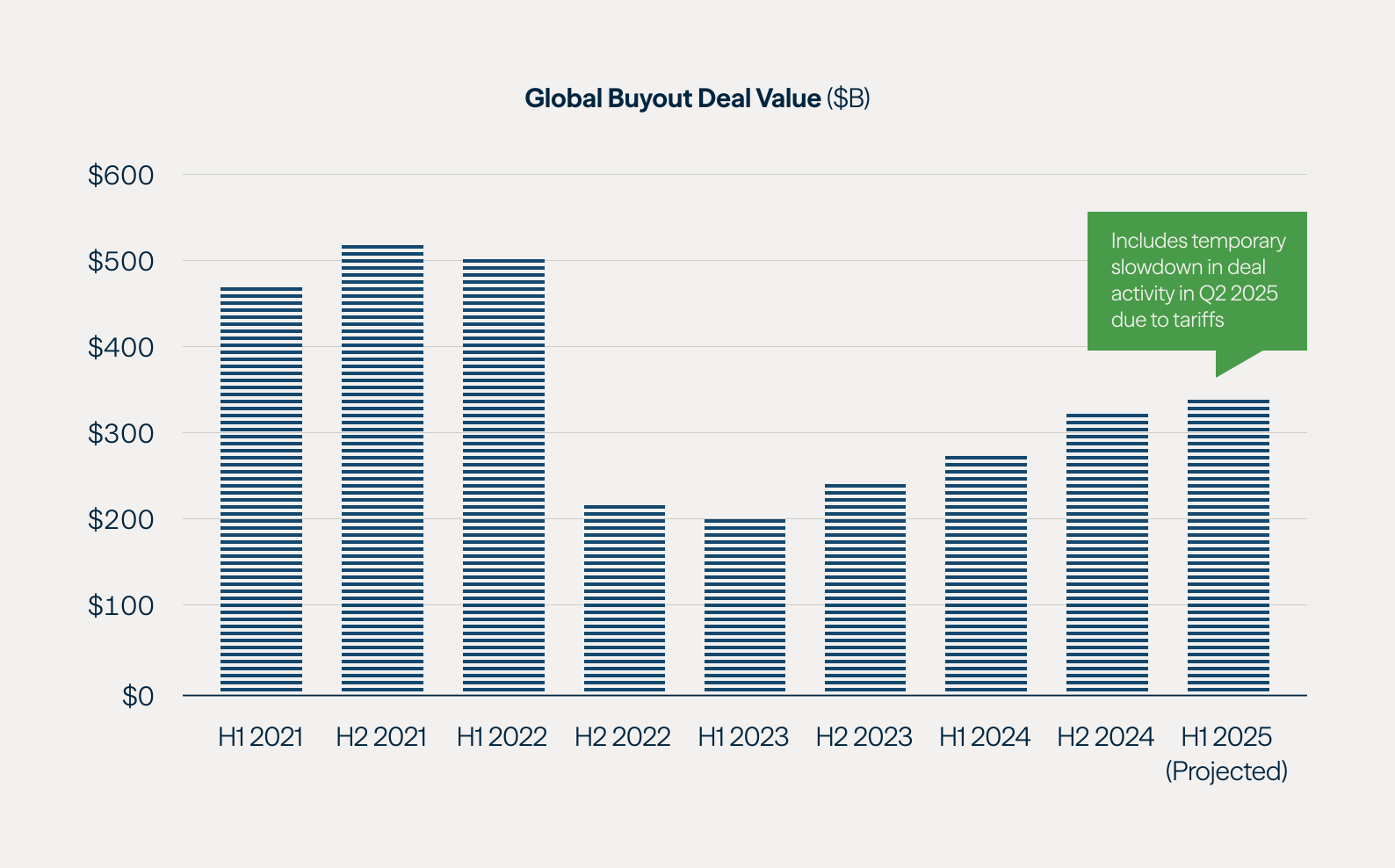
Figure 5: Deal Value Is Rebounding in Private Markets
Source: Bain & Company, “Private Equity Midyear Report 2025,” June 2025.
This dynamic, along with additional potential rate cuts in the U.S. and Europe, points to higher deal activity in 2026. Portfolios can age for only so long before they must transact.
Reset
Over the past decade, the private equity industry grew rapidly as managers used low-cost debt to buy assets and then benefited from market growth and expanding multiples to drive returns with limited margin improvements. This was an unsustainable trend. Many managers that purchased assets at elevated valuations several years ago are stuck holding businesses that now are worth less than what they paid, creating a supply of quality assets available at potential discounts.
The market is recalibrating after a decade of general partner proliferation. The number of firms has tripled relative to capital raised, creating a 3:1 imbalance between fundraising targets and available investor capital.
In 2026, we see the industry beginning to reset, with the most scaled and operationally disciplined players thriving in an era of consolidation. We expect the next 24 to 36 months to mark the steepest phase of this consolidation, particularly among mid-market general partners with differentiated operating capabilities. As the industry shrinks, these capabilities will become the currency of survival, and the managers positioned to benefit most will share four traits:
- Scale to execute complex transactions
- Sector expertise for an informational edge
- Operating capabilities to drive post- acquisition value
- A focused, controllable thesis anchored in tangible performance levers
The new era is forcing managers to work harder and focus on margin expansion—not multiple expansion—to earn their returns. Brookfield Private Equity has historically employed this approach, with operational improvements accounting for over 50% of total value created.¹⁹
The math is unforgiving for managers continuing to rely on cheap leverage. For example, a trans- action with a 5% interest rate and a 70% loan-to- value ratio would require 4%–5% earnings growth to generate a 20% internal rate of return. But with today’s higher rates, a transaction with a 7.5% rate and 55% LTV ratio would require nearly twice the earnings growth—8.4%—to achieve the same 20% return.
Anuj Ranjan
CEO, Private Equity
Public market volatility is driving industrial management teams to pursue privatizing assets, recognizing that meaningful change requires a long-term outlook rather than quarter- over-quarter earnings scrutiny.
In the new era of private equity investing, marginal deals that require financial engineering will underperform. Operational excellence is the new driver of returns.
画像
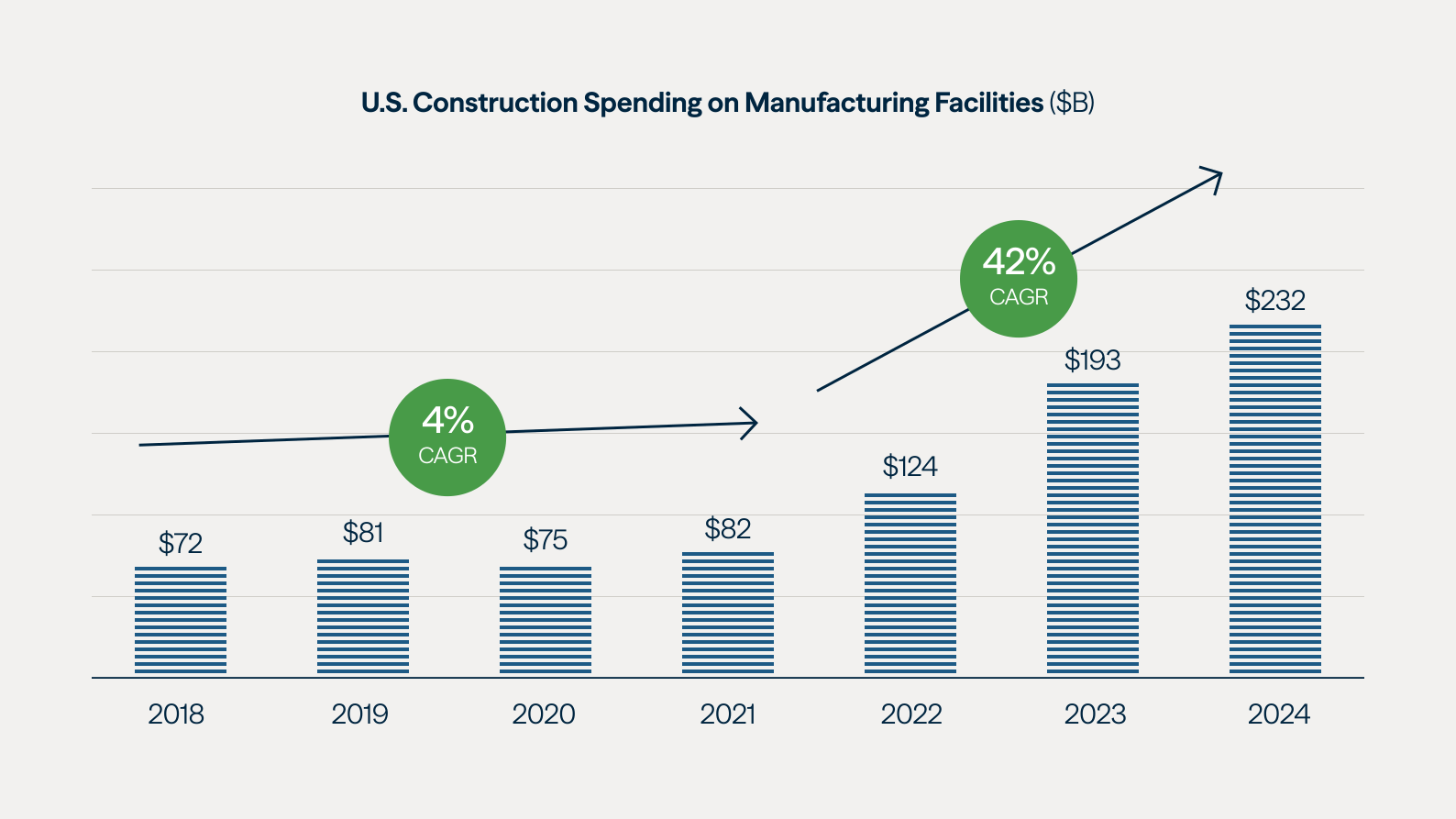
Figure 6: Deglobalization Is Delivering Rapid Growth in the U.S.
Source: PwC, "Strategy & Project Keystone Phase II: U.S. Manufacturing Activity Outlook," February 2025.
Resurgence - Industrial transformation
Sometimes compelling investment opportunities can hide in plain sight. Industrial companies are often overlooked and undervalued, not because their products are obsolete but because many have underinvested in modernization, capacity and operational capabilities. This leaves them less competitive despite strong underlying assets and market positions.
Private capital is increasingly required to transform these companies. Public market volatility is driving industrial management teams to pursue privatizing assets, recognizing that meaningful change requires a long-term outlook rather than quarter-over-quarter earnings scrutiny. Many large-scale conglomerates are rationalizing their noncore businesses, creating attractive buying opportunities for managers able to tackle complexity and drive change.
Beyond internal business strategies and pressure from outside investors, two unfolding global megatrends will drive this transformation in 2026—and likely for decades more.
The backbone of the global economy requires supply-chain resilience. Yet events in recent years— Covid, geopolitical tensions and tariffs—have prompted industrial companies to seriously consider reshoring their essential manufacturing processes to avoid massive cost increases and disruption. This trend toward deglobalization offers private equity firms opportunities to provide the deep expertise and significant capital required to secure industrial company supply chains (see Figure 6).
AI-led digitalization is the other megatrend reshaping businesses across the globe. For industrials, implementation is imperative. Unlike many pure technology companies, industrials often operate with legacy infrastructure, analog workflows and decentralized decision-making that add complexity to modernization efforts.
In our view, AI models will increasingly play an out- sized role in transforming industrials, cutting costs, addressing labor shortages, innovating product lines and optimizing supply chains. This is not a plug-and-play exercise. It demands operational expertise, deep sector knowledge and the ability to redefine how work gets done.
Beyond the industrials sector, AI is creating opportunities in essential business services. In financial services, for example, AI is enhancing efficiency by automating underwriting, improving loss forecasting, and enhancing fraud detection and prevention. In financial infrastructure, banking platforms must transform their analog systems into new-age digital operations to remain competitive.
Productivity potential
AI is poised to become the most impactful general-purpose technology in history, driven by the expected buildout of the necessary capital-intensive physical infrastructure to support its adoption and the efficiencies that result.
We anticipate that AI-led automation could lead to massive growth in global gross domestic product, potentially reaching over $10 trillion in economic productivity gains in the next decade.²⁰ The companies that benefit from these gains won’t just be the technology platforms building the models but, importantly, the industrial and essential business services companies investing in automation and AI tools to accelerate their digital transformation.
Investing for Transformation
As capital markets continue to thaw, private equity opportunities are heating up and creating an optimistic outlook for 2026.
We expect to see significant activity in industrials, particularly in sub sectors that are poised for AI-led digitalization such as specialized manufacturing. The critical need for supply-chain security and the unstoppable rise of AI will drive industrial trans- formation, enhancing productivity and investor returns. We also see additional interest-rate cuts continuing to lower borrowing costs and accelerate deal activity, but likely among fewer managers as the industry consolidates.
For private equity, the age of financial engineering is over, and the defining go-forward narrative is operational excellence. Managers that are willing to roll up their sleeves, reimagine workflows and implement breakthrough technologies will be well positioned to capitalize on the opportunities ahead.
不動産:次期サイクルを見据えた戦略アロケーション
2025年が不動産市場の「再開」の年だったとすれば、2026年は、目利きの投資家が本格的に戦術的な姿勢へと転じ、さらにもっと魅力的な投資機会を見い出し、流動性の回復に伴って高品質な資産を収益化できる年となるでしょう。
2026年の主なテーマ
- 金融市場は正常化が進み、流動性の回復によって価格形成が再開し、ディールフローが活性化しています。魅力的な投資を実行し、リスク低減の図られた優良資産や運営プラットフォームを実現する好機が生まれています。
- 不動産投資の成功は、同資産クラスの回復局面における選別力と運営を通じた価値創出力に左右されます。
- 注力分野は、住宅、物流ロジスティクス、データセンター、そしてホスピタリティ・セクターにおけるエクイティおよびクレジット両方の投資機会です。
2020年代の最初の数年間を特徴づけた混乱が落ち着きつつあるなか、価格発見が再開され、流動性も戻り始めています。
回復が進む中で改めて認識すべきなのは、不動産はこれまでも幾度となく同様の局面を乗り越えてきたという点です。不動産は規模が大きく成熟した資産クラスであり、市場サイクルを通じて長期的に堅調なパフォーマンスを提供してきました。特に、ボラティリティの高い局面やインフレ環境下においても、安定したリターンをもたらしてきた実績があります。その証左として、2024年9月に実施されたデロイトの調査では、世界の回答者の約3/4が、今後12~18カ月の間に不動産への配分を増やす見通しを示しており、そのうち1/3超は、インフレに対するヘッジ手段として不動産を位置付けています6。
流動性の回復
不動産サイクルの根幹を成すのはクレジットです。約2年にわたり、厳しい資金調達環境と高金利が取引を抑制してきましたが、潮目は変わりつつあります。
クレジット市場の再開は、借り手・貸し手双方にとって追い風となっています。米国では、商業用モーゲージ担保証券(CMBS)の発行が急速に回復しており、2025年の発行額は1,200億ドルと、2007年以来の高水準となる見通しです。また、ほぼ全ての不動産セクターで、オリジネーション活動は前年を上回っています7。その他主要市場においても、各国中央銀行による段階的な利下げとともに、資本が徐々に市場へと戻り、同様の動きが見られています。当社の不動産事業においても、こうした流動性の回復を実感しており、2025年11月までに、クレジットで約50億ドル、エクイティで約400億ドルの投資を完了しています8。
もっとも、流動性は市場全体に均等に行き渡っているわけではありません。依然として不動産資産や運用者の多くは、資金調達額の減少やDPIの低下、さらには債務およびファンド満期といった課題に直面しています。こうした状況は、十分な規模と資本力を有する投資家が、中小規模のGPと連携し、リスク低減が図られた優良不動産資産の再資本化を支援する好機を生み出しています。
クレジットの再拡大は極めて重要であり、資本の循環を再び可能にします。取引規模はすでに回復基調にあり、市場の信認が戻りつつあることを示しています。なかでも、堅調なファンダメンタルズと市場の歪みが交差することで、今後1年にわたり魅力的な投資機会が期待される分野として、住宅、物流、データセンター、そしてホスピタリティが挙げられます。
画像
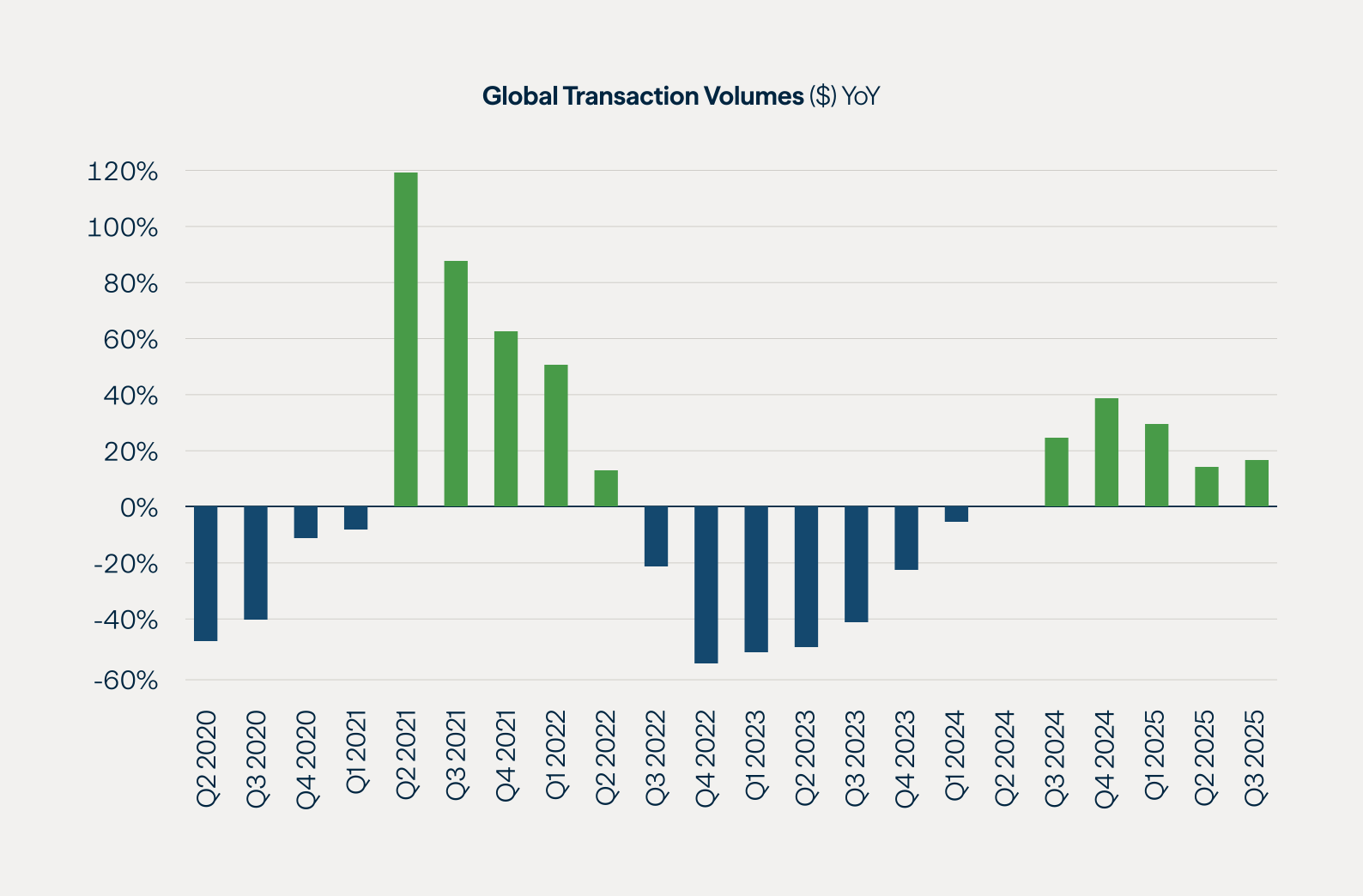
Figure 7: Deal Flow Rebounds
Source: JLL, November 2025. Data as of Q2 2025.
Housing
Housing represents one of the most compelling long-term investment themes we see around the world, with powerful demographic trends driving our investment focus.
In the U.S., demand is being shaped by millennials and baby boomers, who together account for a substantial share of the population (see Figure 8). For millennials, affordability remains a core challenge. Home prices have risen 87% since 2016, and elevated interest rates further limit ownership, fueling demand for rentals and affordable alternatives such as manufactured housing. Manufactured homes, which cost roughly 30% less to own than tradition- al single-family houses, have seen virtually no new supply in the past decade and continue to demonstrate strong NOI resilience and sticky occupancy.²⁴
At the other end of the spectrum, an aging population is driving a nationwide shortage in senior housing. More than 15 million baby boomers are expected to enter the 70–85 age group in the next five years alone. And supply is lagging after years of underdevelopment. By 2030, new inventory is expected to meet less than one-third of projected demand. Communities offering a full continuum of care, including independent living, assisted living and memory care, are particularly well positioned, though they require greater operational sophistication to support residents as their needs evolve. Managers with expertise and experience in complex operating models and improving resident experience will be best positioned to capture the wave of double-digit NOI growth predicted over the next several years.
In Europe, rental demand is rising as renting becomes a permanent lifestyle choice for many households. Since 2010, the growth rate of rent- al housing has outpaced home ownership by 20 percentage points, and the region’s housing stock is among the oldest and least institutionalized in the world.²⁵ In the U.K., more than 80% of homes are more than 50 years old, and only 2% of rentals are institutionally managed—compared with 41% in the U.S.²⁶
Meanwhile, housing supply is at record lows. Land scarcity, labor shortages, longer planning cycles and weaker project economics have driven a 70% drop in new housing starts in the U.K. since 2022.²⁷
画像
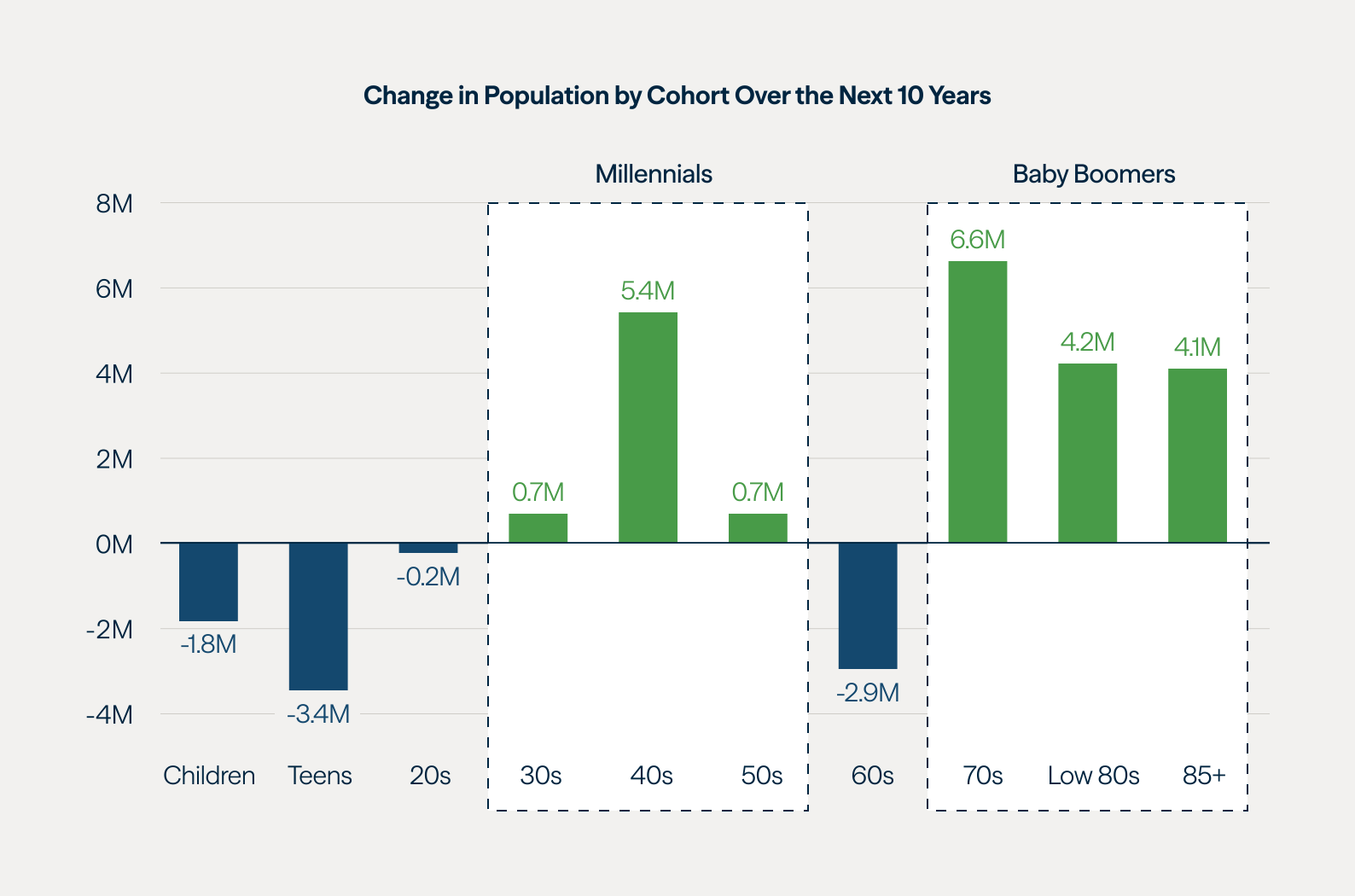
Figure 8: Generational Drivers Across America’s Housing
Source: John Burns, June 2025.
Lowell Baron
CEO, Real Estate
The same forces reshaping the global economy—technology, trade and power—are turning logistics and data centers into some of the most compelling real estate opportunities today.
These conditions create compelling opportunities to acquire, create and expand platforms, and institutionalize fragmented market segments across the housing spectrum.
Moving to the Asia-Pacific region, institutional rental housing is in the early stages across many countries. India stands out, with significant population growth and the projected migration of 350 million people to cities by 2050, one of the largest urban shifts in history.²⁸ As India’s working and middle class continues to grow and urbanize, there is a deep opportunity to provide institutional-quality rental housing in a country where roughly 70% of rental housing remains informally managed.²⁹
Logistics and Data Centers
The same forces reshaping the global economy— technology, trade and power—are turning logistics and data centers into some of the most compelling real estate opportunities today. Digital infrastructure demand is redefining land valuations.
Companies are rethinking where they manufacture, store and distribute goods in light of geopolitical volatility. Regionalization defines the landscape. We are seeing distinct trade clusters emerging across the Americas, Europe and Asia Pacific, with each developing its own ecosystem. Intra-Asia-Pacific trade has surged since 2019—with container volumes rising 13% in 2024 alone—as production and consumption grow more interconnected.³⁰ In some markets in the region, modernization is skipping legacy models altogether—adopting AI-driven fulfillment and multilevel distribution at scale.
In data centers, it’s no longer just about location— it’s about the ability to tap into affordable, sustainable power. Reliable energy access now determines where and how quickly new capacity can be built. We are also seeing industrial land intended for warehouses becoming data centers. There is increasing demand for converting high-quality industrial and business parks around the world into sites for AI factories, where development margins and land value upside are significantly greater. In a recent transaction, we sold a logistics parcel to a buyer seeking power access and land for their data center campus expansion, leading to a sale at pricing 1.5 times the logistics land valuation.
Experience, operating capabilities and relationships tie everything together. Partnerships with utilities secure grid access, and cooperation with governments helps unlock incentives and approvals. And long-term leases with top-quality clients create stable cash flows built on reliability, speed and trust. Logistics operators who deliver consistently for clients can become these companies’ partner of choice across markets.
Hospitality
Around the world, certain hospitality markets have evolved beyond post-pandemic recovery into a stage of sustained growth. Record tourism volume, coupled with limited new supply, is driving up RevPARs and supporting favorable dynamics.
Asia-Pacific hospitality represents a highlight within the sector. Japan, for example, has seen a fourfold increase in tourist arrivals over the past 15 years. Travel spending in the region as a whole is projected to grow at an 8.9% CAGR from 2025 to 2030, and yet Asia Pacific remains significantly undersupplied—hotel density relative to population remains far below that of the U.S.³¹
In Europe, luxury travel is accelerating, reinforcing pricing power for best-in-class assets. While the European hotel market is larger than the U.S. by room count, it remains highly fragmented, with low brand penetration and roughly 80% of assets in private hands.³² That creates opportunities for consolidation-led value creation. Moreover, liquidity constraints and rising construction costs have led many owners to defer refurbishments, resulting in a significant capex backlog of undercapitalized assets and creating compelling value-add entry points for investors.
In this environment, high-quality assets in markets with high barriers to entry and supply constraints will only become more valuable.
Open for Business
As we enter 2026, credit is flowing, liquidity is returning and investors are recalibrating strategies for a commercial real estate market that is increasingly open for business.
As a result, disciplined, selective investors are presented with opportunities to deploy capital into some of the best assets, businesses and management teams, in some of the most exciting geographies and sectors—opportunities that simply are not often available.
These assets benefit from experienced owner-operators who drive value creation through thoughtful, hands-on business plans. Deals are made at entry and measured at exit, but much of the value of a successful investment is earned during the hold period.
In other words, operations matter—especially as we enter the next phase of the real estate cycle.
クレジット:規律は全天候型の戦略
2026年を間近に控え、クレジット市場では強靭さと慎重さの両面を見せています。数年にわたるベース金利高と金融環境の引き締めを経て、パブリックおよびプライベート双方のクレジット市場では、スプレッドが縮小しています。一方で、ファンダメンタルズは概ね健全であり、プライベートクレジットへの継続的な投資家需要は、同資産クラスが分散ポートフォリオにおいて果たす役割への信頼感を示しています。
2026年の主なテーマ
- インフラ、不動産、資産担保融資(ABF)などの分野における成長が加速するプライベートクレジットは、成熟した資産クラスへと成長しています。
- 借り手の質、セクター特性、担保内容、ストラクチャーの違いといった要因が投資成果をより大きく左右することにより、リターンの分散が拡大する可能性があります。
- 魅力的な投資機会を見極めるためには、資産の質とクレジットのファンダメンタルズに焦点を当てた、規律あるアンダーライティングが不可欠です。
市場のノイズを乗り越える
クレジットは、高流動性市場・プライベート市場の双方において引き続き魅力的な投資対象となっていますが、来年はより選別的な姿勢が求められます。資本が潤沢でスプレッドがタイトな環境下では、ファンダメンタルズとリスク管理に根差した規律あるアンダーライティングの重要性がこれまで以上に高まっています。足元では、プライベートクレジットや銀行バランスシート上のローンにおける一部の信用ストレスが注目されていますが、システミックなデフォルトの波が広がっている兆候は見られません。
とはいえ、こうしたデフォルトは、クレジット投資家にとって下方リスクの抑制と元本保全に焦点を当てる重要性を再認識させるものです。流動性が潤沢な局面においてこそ、経験豊富な投資家の規律とスキルが、デフォルトリスクの低減において決定的な役割を果たします。
同時に、クレジット投資家は市場のボラティリティを投資機会として捉えています。ボラティリティは、価格調整や歪みをもたらし、規律ある資本を有利な条件で投下する機会を提供します。十分なドライパウダーと柔軟性を備えたマネージャーは、他者が手控える局面において、安定性と流動性を提供する存在として優位なポジションを築くことが可能です。
Real estate credit markets are experiencing recent record liquidity and rising transaction volumes, with 2025 CMBS issuance on pace to exceed $120 billion, the highest since 2007.
Craig Noble
CEO, Credit
Real Estate Credit: Liquidity Unlocked
Current conditions create a favorable setup for higher-yield deployment. For example, real estate credit markets are experiencing recent record liquidity and rising transaction volumes, with 2025 CMBS issuance on pace to exceed $120 billion (see Figure 9), the highest since 2007. CMBS serves as a key barometer of private real estate credit, and today’s issuance momentum reflects renewed market depth. And, following a meaningful value reset, real estate equity valuations remain about 17% below prior peaks,³³ creating a tailwind for attractive valuations with a deeply insulated entry point into the capital stack for credit investors. In addition, roughly $1.9 trillion of loans will mature over the next two years, while 2025-originated loans are priced about 150 basis points higher than those maturing in that window.³⁴
画像
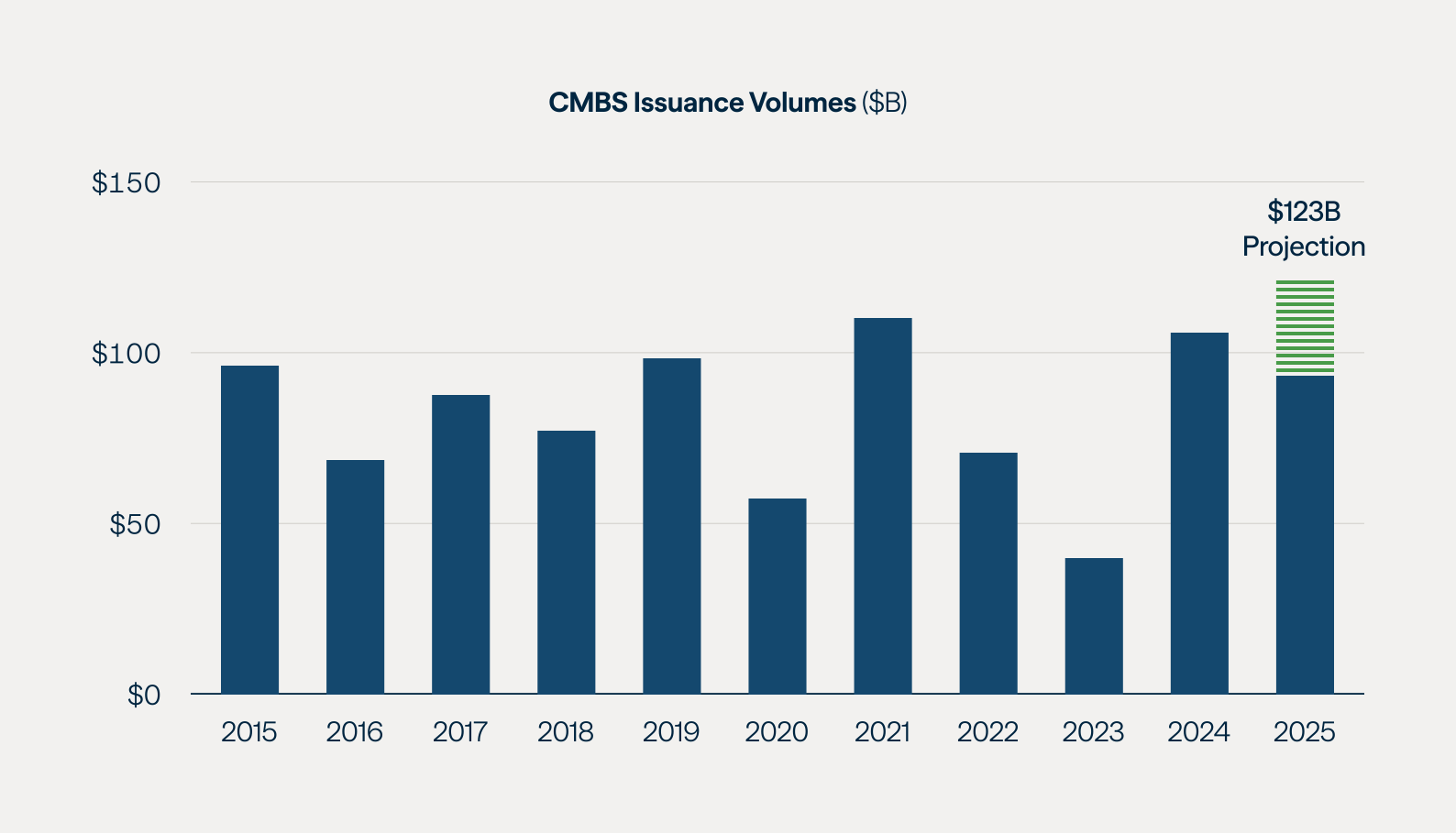
Figure 9: Real Estate Runs on Credit and Markets Are Experiencing Recent Record Liquidity
Source: Trepp, September 2025.
Amid this backdrop, alternative lenders and insurers are gaining share in the $8+ trillion commercial mortgage market. Meanwhile, bank loan originations are rising in comparison with a pullback witnessed in recent years, but banks’ focus has shifted to becoming larger providers of back leverage and working with private lenders through co-origination platforms, strategies that operate alongside and enhance the offerings of alternative lenders. With banks holding nearly twice the market share they do in the U.S., Europe offers compelling opportunities for alternative lenders as the market evolves, especially in the senior part of the capital stack.
Housing remains a high-conviction sector, sup- ported by deep structural undersupply with about four million homes needed in the U.S., and housing completions down 22% year-over-year.³⁵ Opportunities such as office-to-residential conversions and homebuilder financing directly address sustained demand, offering investors differentiated, high- yield exposure in select markets.
We also see selective tactical upside in the office sector, with values 40% below 2022 post-Covid peaks, prime assets commanding 15% premiums, and limited new supply, creating favorable dynamics for lenders seeking exposure to a sector with quickly improving fundamentals and attractive credit metrics. While real estate is a highly diverse sector that requires building-by-building and neighbor- hood-level diligence, today’s backdrop presents one of the most attractive environments in over a decade for disciplined real estate credit deployment.
Infrastructure Debt: Outsized Opportunities
The outlook for infrastructure remains strong. Lower borrowing costs are improving refinancing conditions and transaction activity. Moderate inflation also remains a tailwind for the sector. Because many infrastructure assets can pass through inflation in their pricing and maintain steady demand, they tend to preserve their real (inflation-adjusted) returns better than many other types of investments.
Infrastructure continues to demonstrate the defensive qualities of essential businesses with high barriers to entry and predictable cash flows with embedded inflation protections. These qualities naturally translate into low defaults and high recovery rates (see Figure 10). By focusing on proven operating assets with long-term contracted cash flows and avoiding areas such as untested technologies or large and complex construction risk, investors can preserve downside protection. Infrastructure private credit also provides effective portfolio diversification into essential non-cyclical sectors and is generally not well represented by public market high-yield issuances. In the current environment, infrastructure debt also offers compelling cash yields, providing resilient income and attractive risk-adjusted returns—an enduring advantage as markets navigate a shifting macro environment.
画像
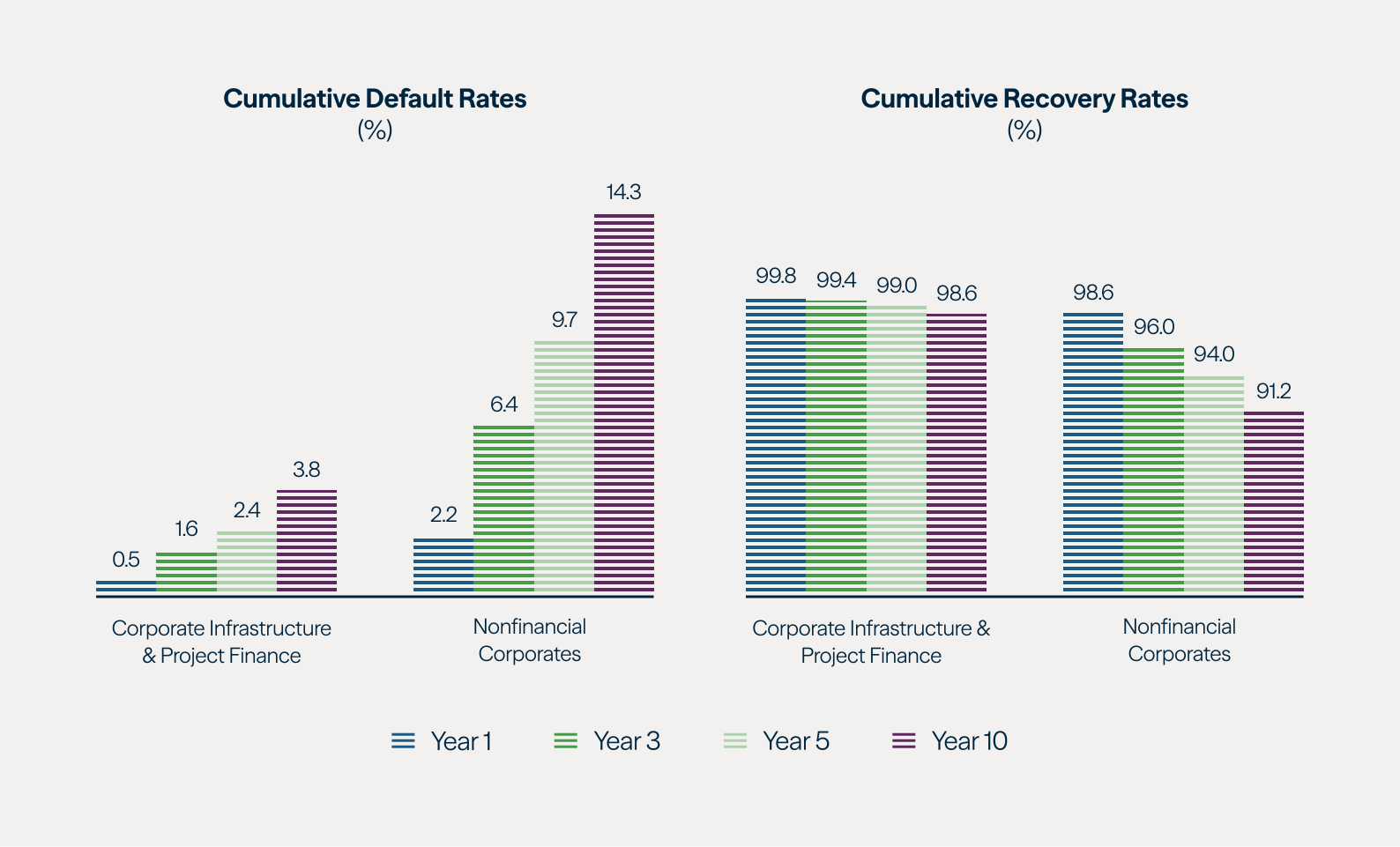
Figure 10: Strong Underlying Assets Can Result in Lower Defaults and Higher Recoveries
Source: Moody’s, “Infrastructure Default and Recovery Rates, 1983-2022.” Non-financial corporates represent loans to parent corporations, not supported by a specific collateral pool of assets.
Looking ahead, a defining growth driver will be the financing of digital and energy infrastructure, particularly AI-related data centers that are supported by strong counterparties and long-term contracts, and which require massive investments in power, cooling and compute capacity. With global AI infra- structure needs estimated to exceed $7 trillion over the next decade,³⁶ investors can capture durable, inflation-resilient yields through infrastructure debt.
Corporate Credit: Quality Over Quantity
Issuance in both leveraged finance and investment-grade markets has been driven by refinancings and repricings. Credit spreads across public and private markets remain near historical tights, relative to the last 15+ years, but the ~150 basis-point premium³⁷ on direct lending private debt remains accessible— underscoring ongoing investor demand for illiquidity compensation even as competition intensifies.
Default rates across direct lending and high yield were in line with historical averages in 2024 and 2025—well below global financial crisis and Covid peak default rates. In contrast, broadly syndicated loan defaults became elevated in that same period. While we still view direct lending as attractive on a relative basis, we are exercising significant caution in this environment with disciplined credit selection.
Our outlook for corporate credit is guided by a sharp- er distinction between sub-investment-grade direct lending and private investment-grade credit, with the latter offering particularly attractive risk-adjusted returns through exposure to credit-worthy high- grade borrowers seeking private market flexibility. We currently expect that capital to increasingly flow toward these higher credit-quality strategies as investors look to generate incremental spread while maintaining—or even improving—their risk profile.
Craig Noble
CEO, Credit
Portfolios will likely exhibit stronger credit fundamentals, lower delinquency rates and healthier excess spread profiles.
ABF: Positioning for What’s Next
The asset-based finance landscape is entering a period of renewed market focus that could unlock compelling opportunities. Within the consumer segment, tighter underwriting standards are expected as lenders respond to evolving credit conditions as well as investor and regulatory scrutiny. The resulting portfolios will likely exhibit stronger credit fundamentals, lower delinquency rates and healthier excess spread profiles. This environment favors platforms that emphasize disciplined, data-driven underwriting, deep fundamental analysis, rigorous servicing oversight and selective capital deployment into higher-quality assets.
At the same time, prospective easing in interest rates could catalyze renewed activity in mortgage markets. Lower borrowing costs will likely drive higher lending volumes and greater transaction velocity across housing markets. Strategic mortgage platforms with integrated verticals combining origination, securitization and asset management stand to benefit from operating leverage and diversified revenue streams. These end-to-end models can capture value across the mortgage lifecycle, from loan production to secondary market activities.
We remain focused on identifying attractive credit opportunities under all market conditions but are also cognizant that dislocations often create value-driven entry points for sophisticated asset man- agers. Firms with deep expertise in underwriting and asset selection are well equipped to identify sec- tor opportunities and pockets of asymmetric risk and reward.
Investing Discipline
In an environment of tighter credit spreads and pockets of macro uncertainty, discipline can serve as both a defensive posture and an advantage. Managers who stay the course—focusing on fundamental value, prudent underwriting and long- term alignment—can position themselves to deliver attractive risk-adjusted total returns compared with their peers.
Whether through real estate credit benefiting from an active market, infrastructure credit supported by long-term contracts, corporate lending to defensive businesses with strong fundamentals, or ABF that reaches into areas of the everyday economy, private credit is poised to grow as an integral part of a diversified portfolio. The key will be to remain selective and flexible in the year ahead.
脚注
1. マッキンゼー・アンド・カンパニー、「The Infrastructure Moment」、2025年9月。
2. IDC、「The Business Opportunity of AI」、2023年11月;ブルックフィールド社内調査。
3. 公開情報に基づく、ハイパースケール企業6社の2024年実績および2025年予想の年間設備投資額;IoT アナリティクス、2025年11月。
4. IEA、「World Energy Investment 2025」、2025年6月。
5. 過去の運用実績は将来の成果を保証するものではなく、ファンド(将来のファンドを含む)またはその投資が同等の成果を達成、もしくは損失を回避できる保証はありません。
6. デロイト、「2026 Commercial Real Estate Outlook」、2025年9月。
7. トレップ、2025年10月。
8. ブルックフィールド内部データ(2025年11月時点)。
重要事項
本資料および本資料に含まれる情報は、教育および情報提供のみを目的としたものであり、いかなる有価証券、関連金融商品、または投資助言サービスの売却の申込み、購入の勧誘、もしくは広告を構成するものではありません。本資料は、市場、業界またはセクターの一般的な動向、あるいはその他の経済・市場環境について言及するものであり、ブルックフィールド・アセット・マネジメント・リミテッドおよびその関連会社(以下総称して「ブルックフィールド」)が提供する特定の商品条件の概要を示すものではありません。
本資料に記載されている情報および見解は、記載日時点のものであり、予告なく変更される場合があります。本資料に含まれる情報の一部は、ブルックフィールドの社内調査に基づいて作成されており、また一部はブルックフィールドが設定した前提条件に基づいていますが、これらの前提が正しいとは限りません。ブルックフィールドは、本資料に含まれる情報(第三者から提供された情報を含む)の正確性または完全性を検証しておらず、また検証する義務を負うものではありません。したがって、当該情報がブルックフィールドによって検証されたものとして依拠すべきではありません。本資料に記載された情報は、ブルックフィールドの見解および信念を反映したものです。
本資料に含まれる一部の情報は、将来予想に関する記述に該当します。さまざまなリスクおよび不確実性により、実際の事象または結果は、これらの将来予想に関する記述に示唆または想定されている内容と大きく異なる可能性があります。ブルックフィールドは、将来予想に関する記述に含まれる期待や見通しが、現時点で入手可能な情報に基づく合理的な前提および想定に基づいていると考えていますが、既知および未知のリスク、不確実性、その他の要因が存在するため、これらの記述に過度に依拠すべきではありません。
投資家の皆様は、ブルックフィールドがスポンサーを務めるファンドまたはプログラムを含め、いかなる投資判断を行う前にも、必ずご自身のアドバイザーにご相談ください。
