Market
Shall We Repeal the Laws of Economics – Part III
Private credit has seen remarkable growth over the past several decades—a trend that has gathered pace and we believe shows no signs of slowing. The asset class grew from just $0.4 trillion in 2010 to nearly $2.3 trillion by the end of 2025, and is projected to reach $4.5 trillion by 2030.1
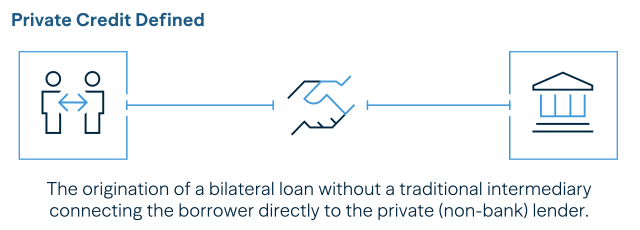
Despite its growing prominence in investing conversations, private credit is often misunderstood. Simply put, private credit refers to loans made directly to a borrower from a non-bank lender. It’s essentially a way to provide debt financing to borrowers who are unable to access traditional bank loans or public markets, typically due to the nature or size of their businesses.
Image
For illustrative purposes only.
Private credit offers significant potential benefits for investors. These include:
- minimizing interest rate risk
- attractive yields and long-term returns
- lower volatility than liquid debt instruments, downside risk mitigation
- enhanced diversification
In Private Credit Demystified, published by the Alts Institute, we explore private credit characteristics and the various private market strategies. We’ll also discuss the reasons behind private credit growth, why it’s expected to continue on its growth trajectory, and the ways an allocation to private credit can potentially benefit a portfolio.
Private credit strategies were once only available to the largest institutional investors. But increasing investor demand has spurred the development of new vehicles and solutions such that private credit – and its potential benefits - is now more accessible to a broader range of investors.
1 Source: Preqin Global Report: Private Credit in 2026, December 2025. There is no assurance that such events or projections will occur, and actual outcomes may be significantly different than those shown here. Based on assumption that Global Private Credit will grow at a compound annual growth rate of 13.57% (Preqin’s projected growth rate for global private credit) from 2024 to 2030, with 2025 to 2030 figures representing forecasted growth. Data from 2010 to 2030F include business development companies (BDCs)..
ID 1643
