Market
Memos From Howard Marks: What’s Going on in Private Credit?Market / General
Alts Quarterly: Alternative Investments: The Questions on Everyone’s Mind
Read our Q1 Alts Quarterly where we answer the top questions on everyone’s mind about the key alternative investment assets.
Introduction
The risk market rally has slowed, but grinds on. The fourth quarter of 2025 saw equity and other risk markets continuing to climb, albeit at a slower pace, capping a year of strong performance. The S&P 500 rose 18% for the year, but lagged international and emerging markets. The MSCI ACWI ex USA climbed 32%, while the MSCI Emerging Markets Index rose 34%.
Investors sought to boost portfolio resilience. Interestingly, traditional “safe haven” assets, including bonds and precious commodities, also rallied, suggesting that investors sought diversification and protection against political and economic uncertainty.
The drivers of the rally remained the same. Drivers included rate cuts by central banks, continued earnings strength, particularly in tech, and a resilient economy. Non-U.S. markets rallied on a weaker U.S. dollar and relatively attractive valuations.
Challenges persist, drawing increased focus on alternatives. Markets and the economy continue to face challenges, including geopolitical tensions, a soft labor market and uncertainty around the path of interest rates. Against this backdrop, many investors are turning to alternative investing in an effort to boost diversification, help mitigate risk and potentially generate reliable income streams.
Investors seek to better understand alternatives. While alternative investing has gained popularity in recent years with investors, including individual investors, many are unfamiliar with the broad category of alternative investing, such as the various alternative asset classes and their benefits. Through the Alts Institute, we have produced a variety of educational articles, papers and web content on alternative investing, including primers on asset classes and a glossary of terms.
Still, advisors tell us that many investors want to learn more. With that in mind, in this issue of the Alts Quarterly we answer the top questions we are hearing from investors about alternatives. Specifically, we will discuss the following:
Infrastructure: Are artificial intelligence (AI) investments creating a bubble? The development of AI requires significant digital and energy infrastructure to support it, despite the concerns about overinvestment in AI creating a bubble.
Private real estate: Will commercial real estate valuations improve in 2026? We explore how commercial real estate markets are normalizing, characterized by improving valuations and a lower-interest-rate environment.
Private credit: Structured credit then and now—what investors want to know. Structured credit, which
pools similar loans or debt obligations and issues securities backed by cash flows, has at times been unfairly
blamed for the global financial crisis. The asset class has evolved significantly in recent years, and can give
investors exposure to diverse sectors that may offer higher yield potential than traditional fixed income.
Private equity: Why does private equity matter to the broader economy? We discuss the important and
often underappreciated role private equity plays in the economy, and how this role may support its potential
benefits, including diversification, income generation and long-term return potential.1
In addition, our quarterly Alts Market Dashboard shares data, market and investing insights that we find
interesting from across the alternatives investing universe. Notable numbers include:
- $107.7B: Private infrastructure deal volume reached $107.7 billion in Q4 2025, driven primarily by large-scale transactions in digital infrastructure and renewables.2
- 6.7%: Average cap rates decreased slightly, while the Green Street Commercial Property Price Index (CPPI) was up 2.4%.3 Taken together, this signals that commercial real estate valuations are beginning to recover.
- 87.1%: Average secondary market pricing reached 87.1%4 in Q2 2025, an approximately 130 basis point (bps) increase from the previous quarter, suggesting potential strengthening of the secondary private equity market.
Are AI Investments Creating a Bubble?
KEY POINTS
- The rapid expansion of AI usage has attracted significant investment, which has raised concerns that we are in an AI-driven bubble.
- Disciplined risk management when investing in the AI buildout remains critically important.
- The fact remains: AI adoption and its needed buildout is already underway and requires substantial digital and energy infrastructure to support it—creating a significant investment opportunity.
Has Demand for AI Created a Bubble?
The explosive growth of AI requires enormous digital infrastructure and compute capacity, which has driven strong demand for power and supporting infrastructure. But now some investors are concerned that growth in AI is overblown, and has created a bubble.
We believe the answer is no—but keeping sound risk-mitigation procedures in place when investing is nonetheless key.
Equity markets have been fueled by AI developments. Beginning with the release of ChatGPT, investor
sentiment around AI soared, eventually driving a surge in valuations as markets rushed to price in its disruptive potential.
Despite having some concerns about excessive hype, we see little risk of overbuilding the related AI infrastructure. Below, we outline three key reasons for including AI infrastructure investments in a portfolio over the long term.
1. Demand for infrastructure remains strong—and is likely to accelerate. The advent of AI has already sparked growth in infrastructure assets, with demand for data centers, fiber networks and electric utility grids far exceeding initial expectations. As AI capabilities become more commercial, the need for high-performance infrastructure is likely to further accelerate.
Artificial general intelligence could unlock as much as $10 trillion in productivity gains over the next decade—but realizing that potential will require $7 trillion of infrastructure investment.5 This includes data centers, or “AI factories”; dedicated power generation; compute infrastructure such as GPUs; semiconductor manufacturing; and fiber networks.
More efficient models are being used in greater numbers to tackle more complex tasks, consuming more compute overall. Ongoing research and development (R&D) will itself require more AI compute for training and experimentation. To meet the demand, both private companies and governments are investing billions in the race to develop the next generation of AI. Global hyperscaler capital expenditure (capex) is projected to rise 2.5x in the next five years (see below).
Image
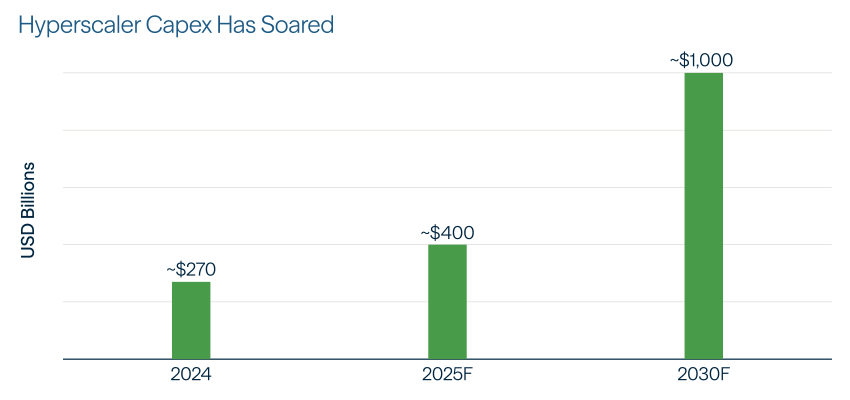
Actual 2024 and forecast 2025 annual capex for six hyperscale companies, based on publicly available
disclosures. Source: IoT Analytics, as of November 2025; NVIDIA, as of August 2025.
Building a hyperscale data center requires over $10 million per megawatt, while the compute infrastructure within it can exceed $30 million per megawatt, driven by chip requirements.
In short, future power needs still point to demand far outpacing current and planned infrastructure capacity, even if estimates of those needs are meaningfully reduced.
2. Infrastructure’s resilience and ability to weather volatility. Historically, infrastructure investments have tended to weather market cycles, despite geopolitical or economic uncertainty. The sector’s resilience stems from its core characteristics: perpetual, long-lived assets with high barriers to entry; contracted or regulated revenue streams that are typically indexed to inflation; and stable, predictable cash yields with low correlation to public markets. Many assets related to the AI buildout—from regulated utilities to contracted digital networks—benefit from inflation-indexed revenue streams that are designed with the goal of preserving real returns for investors.
Furthermore, the current environment—stabilizing interest rates, a resilient global economy with the potential for higher inflation—helps to reinforce the case for investing in high-quality, long-duration assets that can generate relatively steady cash flows, offer attractive risk-adjusted returns and may help provide inflation protection.
3. The need for private capital is likely to continue. The building of infrastructure—especially digital infrastructure—is capital intensive by nature, and obtaining the needed levels of capital expenditures requires experienced partners. We are in a capex supercycle where “hyperscalers”—large cloud computing providers at the forefront of the AI revolution—are pouring unprecedented amounts of money into graphics processing units (GPUs), data centers, power infrastructure and model development. At the same time, governments are highly motivated to develop AI technology, as it has become a strategic sovereign priority driven by commerce and national security concerns.
But with many governments facing record debt levels and large tech firms seeking to team up with well-capitalized partners, we believe that there may be significant opportunities for innovative capital partnerships to meet capital needs and deliver essential infrastructure. The largest capital providers, with relevant experience and a long-standing local presence, may be well positioned to capture a meaningful share of the opportunity.
Positioning for Long-Term Investment and Reduced Risk
Investing in AI-related infrastructure presents significant opportunities, but it is not without risks or challenges. Experienced infrastructure investors begin by understanding where the potential bottlenecks lie, as well as where the next technological leaps will come from, which is essential to designing and investing in the physical backbone of AI for the long term.
Brookfield has invested in infrastructure assets for more than 100 years and employs several core investment principles, aiming to protect and preserve capital while providing income and attractive returns for clients. Resilience has always been at the core of Brookfield’s approach. As it relates to infrastructure, we are especially mindful of technological obsolescence. For example, AI hubs need modular designs so that power and cooling systems can be upgraded quickly as new chips roll out, and facilities can be designed with space and piping for future immersion cooling.
Brookfield invests in diversified projects across the AI value chain that are backed by contracts with high-quality counterparties, and avoids building on a speculative basis. Resilience has always been at the core of our approach. Patient, disciplined capital—deployed into the infrastructure assets that power progress—creates the opportunity to build enduring value for investors and partners.
The Bottom Line
Despite concerns about an AI-related bubble, the AI buildout is already underway and needs digital and energy infrastructure to support it. The modernization of the grid, in turn, cannot proceed without private capital. This convergence is creating what we believe is a once-in-a-generation opportunity for disciplined, long-term investors to fund the physical backbone of the global economy’s next phase.
Will Commercial Real Estate Valuations Improve in 2026?
KEY POINTS
- Commercial real estate markets stand to benefit from a number of tailwinds, with attractive valuations, a lower interest-rate environment and easing credit conditions reviving deal activity.
- With the current environment showing both opportunities and challenges, selectivity is key.
- Real estate is a large, mature asset class that has delivered strong long-term performance across market cycles, providing stable returns in volatile or inflationary periods.
Three Factors Currently Supporting Real Estate
The commercial real estate sector is entering 2026 with renewed momentum, clearer visibility and growing optimism following nearly two years of restricted financing and elevated rates that constrained transactions. Three factors are supporting the market’s optimism:
1. Lower interest rates. Three rate cuts in 2025 helped stabilize lending rates—and lower interest rates have historically led to higher cash flow coverage, bringing down loan loss reserves for banks. Larger reserves then facilitate more commercial real estate lending and deal flow. Historically, the resulting increase in transaction activity has led to higher property values over the long term.
2. Valuations are beginning to rise—but are still attractive. Across most asset classes and quality levels, pricing has found a floor, and values are rising again. However, real estate equity valuations remain about 17% below prior peaks,6 creating a tailwind for attractive valuations, with a deeply insulated entry point into the capital stack for credit investors.
3. Easing credit conditions are reviving deal activity. The backbone of any real estate cycle is credit. And after nearly two years of tightened credit conditions, we are seeing a significant increase in real estate loans. As debt costs eased in 2025, lenders reentered the market and institutional capital returned, supporting a broad-based revival in deal activity.
Indeed, real estate credit markets are experiencing record liquidity and rising transaction volumes, with 2025 issuance of commercial mortgage-backed securities (CMBS) exceeding $125 billion, the highest since 2007 (see below). Because CMBS serves as a key barometer of private real estate credit, today’s issuance momentum reflects renewed market depth.
Image
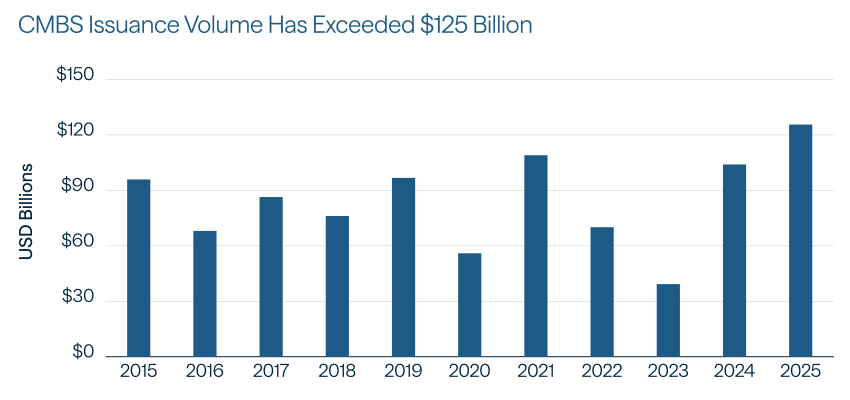
Source: Trepp, as of January 2026.
The reemergence of credit is critical, as it enables capital to flow again. Transaction volumes have already rebounded, signaling renewed confidence (see below).
Image
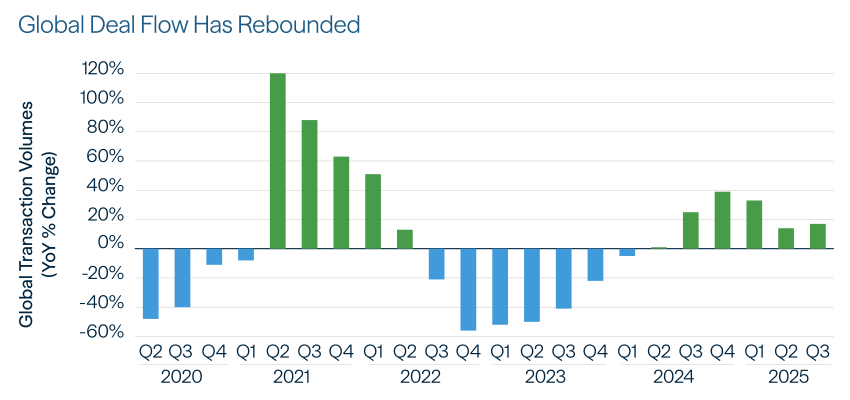
Source: Jones Lang LaSalle (JLL), as of November 2025.
Selectivity Is Key
The current environment offers attractive opportunities for investors, although some challenges persist in certain segments of the market. Below are three sectors we believe are particularly well positioned for the year ahead:
Housing. Supply is at record lows, driving up demand, which has been further bolstered by the powerful demographic trends being shaped by millennials and baby boomers.
Logistics. Digital infrastructure demand is redefining land valuations in the logistics sector—particularly in locations with favorable access to power. Skilled operators with utility partnerships can secure grid access and engage local government cooperation to help unlock building incentives.
Hospitality. Record tourism volume, coupled with limited new supply, is supporting favorable dynamics for the hospitality real estate sector.
However, it is important to note some challenges in the asset class. While liquidity is broadly returning, it remains uneven. Moreover, many real estate assets and managers continue to face stress due to declining fundraising volumes and lower cash-on-cash returns, combined with debt and fund maturities.
Still, these challenges can create opportunities for scaled and well-capitalized investors to partner with motivated sellers, including small and midsize general partners (GPs), to help recapitalize high-quality, de-risked real estate assets.
The deal environment is primed for those who can combine data-driven insight with strategic conviction, operating experience, and access to opportunities in geographies and sectors that are not often available to those with less market insight. Quality matters more than ever—top-performing assets and strong operators are expected to outperform, while tertiary markets and lower-tier properties carry greater risks. It is important to remember that deals are made at entry and measured at exit, but much of the value of a successful investment is earned during the period when it is being held. In other words, operations matter—especially as we enter the next phase of the real estate cycle.
The Bottom Line
Commercial real estate markets are normalizing, with renewed liquidity enabling price discovery and reactivating deal flow, and valuations are attractive. Additionally, a declining-interest-rate environment should provide a tailwind for the asset class.
With the recovery underway, it is important to remember that real estate is a large, mature asset class that, in our view, has delivered strong long-term performance across market cycles, providing stable returns in volatile or inflationary periods. We believe that success in real estate investing will depend on selectivity and getting results from operational value creation as the asset class recovers.
Structured Credit Then and Now: What Investors Want to Know
KEY POINTS
- Structured credit pools similar loans or debt obligations and issues corresponding securities backed by their cash flows.
- Post-crisis reforms have reshaped structured credit into a more disciplined and lower-risk market. Today structured credit generally features stronger credit support, more standardized documentation and enhanced transparency through asset-level reporting.
- Issuance volumes have also recovered in a more measured way, supported by institutional investors with longer investment horizons, rather than highly leveraged, short-term capital.
- Because structured credit’s primary buyers are institutions capable of navigating complexity, the asset class can feel opaque to individual investors.
- Structured credit can offer a range of benefits. By securitizing pools of loans, lenders can free up capital to make new loans, while investors gain exposure to cash-flowing assets across diverse sectors that may offer higher yield potential than traditional fixed income.
What Is Structured Credit?
Structured credit involves pooling similar loans or debt obligations and issuing securities backed by the cash flows from those assets (see below). Unlike traditional bonds, where investors lend to a single issuer, structured credit securities are backed by diversified pools of loans, spreading risk across many borrowers rather than relying on a single corporate balance sheet.
Structured credit includes several major types of securities. Each is backed by a different kind of underlying
asset and is driven by distinct economic factors, which can enhance diversification within a portfolio.7
The four main types of traded segments of structured credit are:
- Asset-backed securities (ABS)—backed by pools of consumer and commercial loans, such as auto loans, credit cards, equipment leases and other receivables.
- Commercial mortgage-backed securities (CMBS)—backed by income-producing commercial real estate loans.
- Residential mortgage-backed securities (RMBS)—backed by income-producing pools of residential mortgage loans.
- Collateralized loan obligations (CLOs)—backed by pools of senior secured corporate loans.
In addition to these traded markets, asset-based finance (ABF) represents the private side of structured credit, where similar asset-backed lending structures are originated and held outside the public securitization markets.
Image
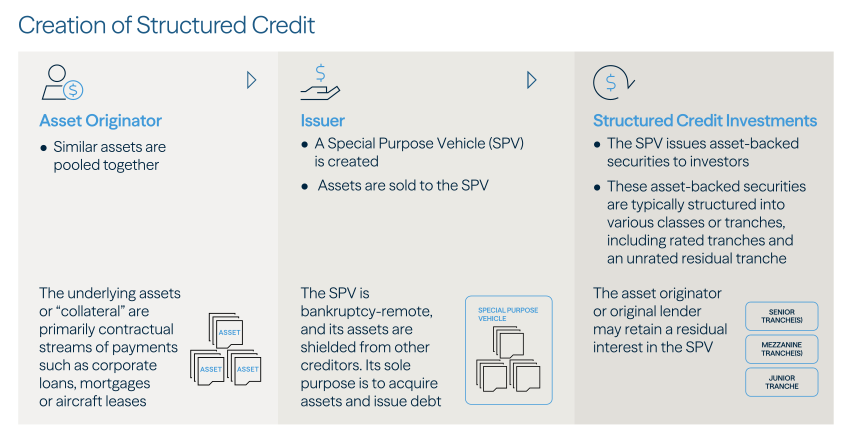
For illustrative purposes only.
Source: Oaktree.
Many investors associate structured credit, particularly RMBS securities, with the global financial crisis (GFC).
While inadequate risk controls by some investors and issuers of certain mortgage-related securities contributed meaningfully to the crisis, CLOs backed by pools of senior secured corporate loans generally performed far better, with relatively low default rates even during periods of severe market stress (see below).
Image
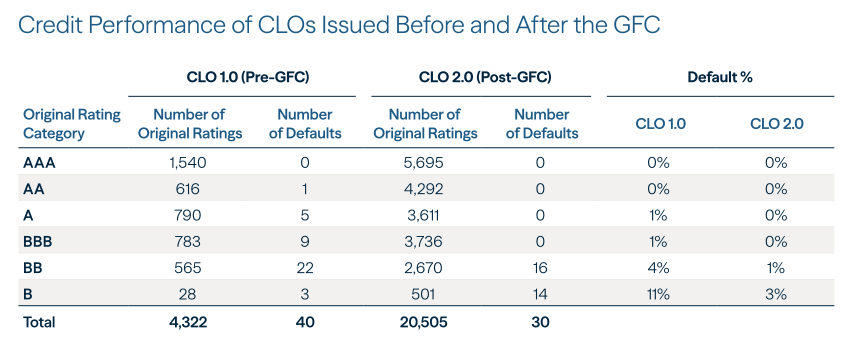
Default percentage calculated as number of defaults divided by number of original ratings.
Source: S&P Global. As of September 30, 2025.
Since the crisis, the CLO market has evolved significantly, with regulatory reforms emphasizing the need for greater transparency, enhanced disclosure and improved alignment of incentives. Some of the most notable reforms include the implementation of manager co-investment and, in some jurisdictions and transaction types, “risk retention” requirements, which can require managers or sponsors to retain an ongoing economic interest in the transactions they manage and to bear meaningful risk alongside investors. Modern CLOs are a more mature, transparent and investor-focused segment of the structured credit market.
Key Differences From Traditional Fixed Income
Structured credit sits within the universe of fixed income but behaves differently from traditional fixed income in many ways due to its structural protections, floating-rate nature (which offers protection against interest-rate changes) and reliance on contractual cash flows rather than issuer credit alone. Some of these key differences include the following:
Creditworthiness. Traditional bonds depend on the creditworthiness of a single issuer and typically pay a fixed coupon. Structured credit, by contrast, is backed by hundreds or thousands of underlying loans and often pays floating-rate income, which can reduce interest-rate sensitivity.
Risk mitigation. Structured credit risks are managed through built-in structural features: Lower-ranking investors in the capital structure will absorb losses first through subordination, while excess interest income (excess spread) can provide an additional buffer for senior investors—protections that are not typically available in traditional bonds.8
Tranching. Unlike traditional fixed-income instruments, structured credit investments are divided into tranches, each with a different risk and return profile. Senior tranches generally offer lower yields but more risk protection, while mezzanine and junior tranches offer higher potential returns in exchange for taking on greater risk. This allows managers to choose the level of risk that best aligns with their investment goals rather than accepting a one-size-fits-all exposure (see below).
Post-crisis improvements in structuring have been supported by significantly enhanced data transparency at the underlying loan level, enabling more rigorous credit analysis, monitoring and stress testing—particularly within ABS.
Image
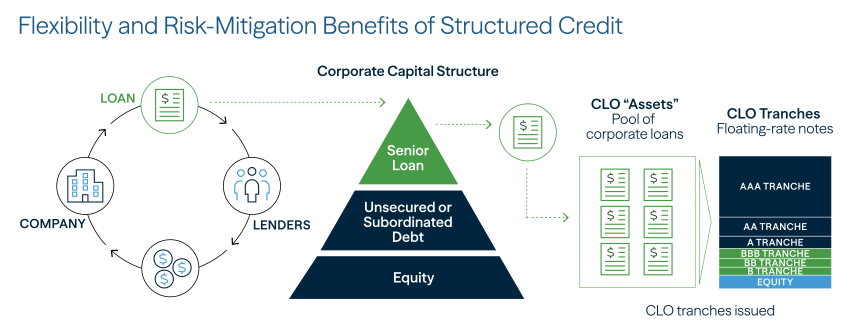
For illustrative purposes only.
The Benefits of Structured Credit
Structured credit can complement traditional fixed income by boosting income potential, portfolio diversification and exposure to different economic drivers.9 It is often used alongside corporate bonds and loans to improve portfolio efficiency rather than replace core holdings.
Structured credit has historically offered attractive income due to a “complexity premium,” meaning managers who invest in the asset class are compensated for analyzing and monitoring more complex structures (see below). However, because payment streams come from diversified pools of loans, structured credit can also reduce reliance on any single borrower or issuer.
Image
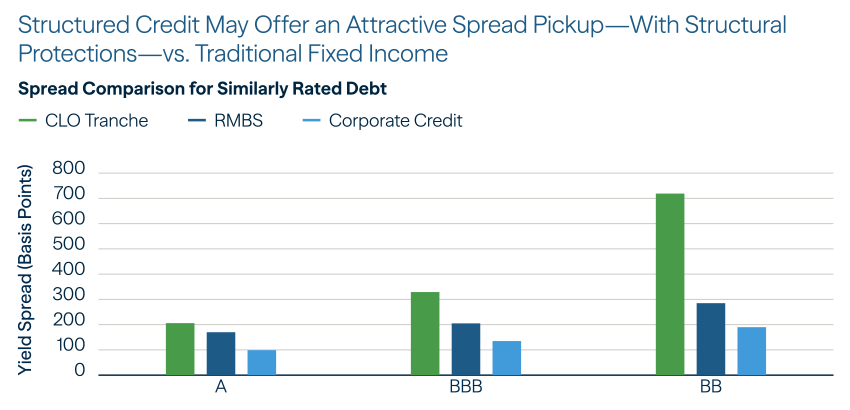
A and BBB bonds are represented by ICE BofA Single-A and BBB U.S. Corporate Indexes, respectively. BB high-yield bonds are represented by ICE BofA BB U.S. High Yield Index. A, BBB and BB CLOs are represented by J.P. Morgan Collateralized Loan Obligation Index. RMBS is represented by VERUS 2025-08, which priced September 5, 2025.
Source: ICE Data Indices, J.P. Morgan. As of December 31, 2025.
Many structured credit securities are floating-rate, which can make them less sensitive than fixed-rate bonds to rising interest rates. In a declining rate environment, returns may moderate; however, many structures incorporate interest-rate floors, which can help support income levels.
Risks to Consider
While structured credit sometimes carries a legacy stigma from the financial crisis, today’s structures, particularly CLOs, operate under a very different regulatory and market framework. Still, structured credit contains risks that investors should understand.
First, structured credit is more complex than traditional bonds and requires careful analysis of both the structure and the underlying collateral. Effective risk assessment often depends heavily on the quality and depth of available data as well as having the time and resources to devote to underwriting and reviewing individual loans. Second, credit risk, liquidity risk and prepayment or extension risk can all affect performance. While structural protections can help mitigate losses, they do not eliminate risk entirely. The capabilities of skilled, experienced managers with robust data analytics and underwriting processes are particularly important to favorable outcomes.
The Bottom Line
Structured credit is not a single asset class—it encompasses a broad universe of securities backed by diverse, cash-flowing assets. That diversity underscores its ability to boost diversification, enhance income and complement traditional fixed-income exposures.10 When thoughtfully implemented, we believe structured credit can be an accretive component of a diversified, income-oriented portfolio.
While structured credit can be a complex asset class, successful outcomes across market conditions can be achieved by partnering with skilled managers experienced in underwriting, structuring and monitoring collateral and deal structures across multiple economic cycles.
Why Does Private Equity Matter to the Broader Economy?
KEY POINTS
- Private equity plays a surprising and underappreciated role in promoting economic activity and supporting employment.
- Private equity’s contribution to economic activity matters for investors. As a meaningful share of economic output and employment occurs outside public equity markets, private ownership has become a more prominent part of how investors and their portfolios engage with the real economy.
- Incorporating private equity into one’s portfolio can help boost diversification, income and long-term returns, and those benefits are rooted in the asset class’s relevance and importance to the economy.
Private Equity’s Surprising Economic Footprint
Too often private equity can generate negative press. Leveraged buyouts, cost-cutting measures including layoffs, and major transactions often grab the headlines.
In practice, however, most private equity ownership involves operating businesses that support everyday economic activity. For investors, this distinction matters—not just with regard to transactions, but also as a reflection of where economic activity increasingly resides.
Private equity supports a wide range of everyday experiences—such as servicing a car, completing a card payment or buying groceries. Each of these rely on operating businesses (many of which are privately owned) that enable commerce and services to function reliably behind the scenes (see below).
Image

For illustrative purposes only.
These companies may not be household names, but collectively they play a meaningful role in how goods and services are produced, distributed and delivered across the economy. Taken together, these businesses are integral to the functioning of the economy.
This helps explain why private equity has become so economically significant. Rather than existing solely as a financial mechanism, private equity ownership is often tied to companies with recurring demand, sizable workforces and deep integration into supply chains and service networks.
Economic Contribution and Employment
Globally, the number of publicly listed companies remains relatively limited at roughly 50,000 firms worldwide, according to World Bank data.11 By contrast, the vast majority of companies are privately held, whether backed by private capital or founder- and family-owned enterprises (see below). This imbalance underscores why private ownership structures play a central role in the modern economy and why so much economic activity takes place outside the public markets.
Image
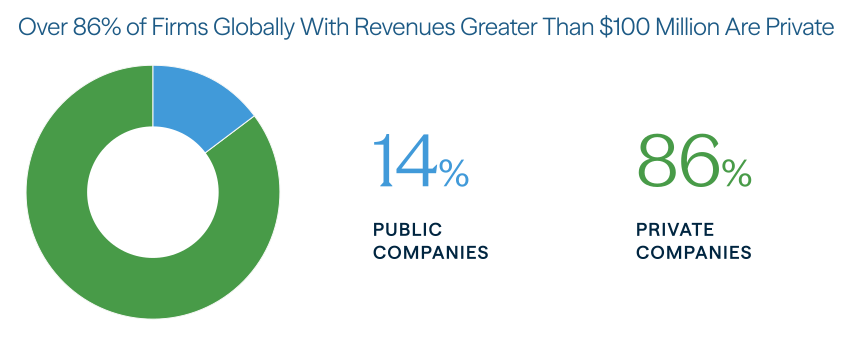
Source: S&P Capital IQ, 2024.
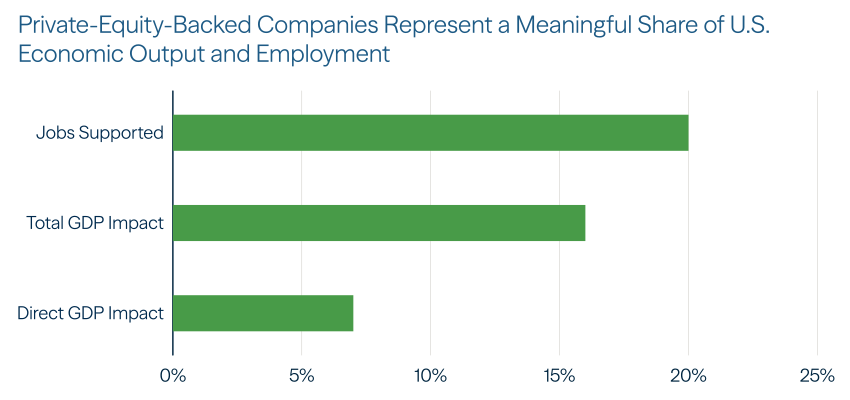
The economic role of these businesses is not abstract—it is measurable. In the U.S., private-equity-backed companies generated approximately $2 trillion in direct gross domestic product (GDP) in 2024, representing roughly 7% of total U.S. GDP. When indirect supplier activity and employee consumption are included, the broader private-equity-supported footprint totaled an estimated $4.7 trillion of economic output. That equates to close to 16% of U.S. GDP (see below).12
Image
Source: American Investment Council and EY, as of March 2025.
Employment data reinforce this scale. In 2024, private-equity-backed companies directly employed around 13 million workers, while total employment supported across supply chains and related economic activity reached approximately 33 million jobs when direct, indirect and induced effects are included— roughly one in five private-sector jobs.13
Beyond output and employment, the economic contribution of private-equity-backed companies extends to wages and public finances. On average, compensation at private-equity-backed companies is competitive relative to national benchmarks, reflecting the operating intensity and scale of many of these businesses.14 Collectively, their activity supports nearly $800 billion in federal, state and local tax revenue, helping fund schools, healthcare systems and core public infrastructure such as roads, transit and utilities.15
The Bottom Line
For investors, the context of private equity’s contribution to economic activity matters. As a meaningful share of economic output and employment occurs outside public equity markets, private ownership has become a more prominent part of how portfolios engage with the real economy. Incorporating private equity into a portfolio can help boost diversification, income and long-term returns, and those benefits are rooted in the asset class’s relevance and importance to the economy.
Read more in our Alts Quarterly Q1 2026.
ENDNOTES
1 Diversification does not ensure a profit or protect against loss.
2 Preqin, as of December 31, 2025.
3 Green Street, as of December 31, 2025.
4 PEFOX Research, as of June 30, 2025 due to latest available data.
5 Brookfield internal research, as of August 2025.
6 Green Street, Commercial Property Pricing Index (CPPI), as of October 2025.
7 Diversification does not ensure a profit or protect against loss.
8 Structured credit risk-mitigation features may not insulate investors entirely from exposure to the underlying loan performance in the portfolio.
9 Diversification does not ensure a profit or protect against loss.
10 Diversification does not ensure a profit or protect against loss.
11 World Federation of Exchanges, as of December 2024.
12 American Investment Council (AIC) and Ernst & Young (EY), as of March 2025.
13 AIC and EY, as of March 2025.
14 AIC and EY.
15 AIC and EY.
A WORD ABOUT RISK
As an asset class, private credit comprises a large variety of different debt instruments. While each has its own risk and return profile, private credit assets generally have increased risk of default, due o their typical opportunistic focus on companies with limited funding options, in comparison with their public equivalents. Because private credit usually involves lending to below-investment-grade credit assets is increased in return for taking on increased risk.
Investments in real estate-related instruments may be affected by economic, legal or environmental factors that affect property values, rents or occupancies of real estate.
Infrastructure companies may be subject to a variety of factors that may adversely affect their business, including high interest costs, high leverage, regulation costs, economic slowdown, surplus capacity, increased competition, lack of fuel availability and energy conservation policies.
Alternative investments often are speculative and include a high degree of risk. Investors could lose all or a substantial amount of their investment. High-yield bonds are subject to interest-rate risk. When interest rates rise, bond prices fall; generally, the longer a bond’s maturity, the more sensitive it is to this risk. Yields are subject to change with economic conditions. Yield is only one factor that should be considered when making an investment decision.
The information in this publication is not and is not intended as investment advice, an indication of trading intent or holdings, or a prediction of investment performance.
Diversification does not guarantee a profit or protect against loss. The views and information expressed herein are subject to change at any time. Brookfield disclaims any responsibility to update such views and/or information. This information is deemed to be from reliable sources; however, Brookfield does not warrant its completeness or accuracy.
The opinions expressed herein are the current opinions of Brookfield, including its subsidiaries and affiliates, and are subject to change without notice. Brookfield, including its subsidiaries and affiliates, assumes no responsibility to update such information or to notify clients of any changes. Any outlooks, forecasts or portfolio weightings presented herein are as of the date appearing on this material only and are also subject to change without notice.
Past performance is not indicative of future performance, and the value of investments and the income derived from those investments can fluctuate.
FORWARD-LOOKING STATEMENTS
The information herein contains, includes or is based on forward-looking statements within the meaning of the federal securities laws, specifically Section 21E of the Securities Exchange Act of 1934, as amended, and Canadian securities laws. Forward-looking statements include all statements, other than statements of historical fact, that address future activities, events or developments, including, without limitation, business or investment strategy or measures to implement strategy, competitive strengths, goals, expansion and growth of our business, plans, prospects and references to our future success. You can identify these statements by the fact that they do not relate strictly to historical or current facts.
Words such as “anticipate,” “estimate,” “expect,” “project,” “intend,” “plan,” “believe” and other similar words are intended to identify these forward-looking statements. Forward-looking statements can be affected by inaccurate assumptions or by known or unknown risks and uncertainties. Many such factors will be important in determining our actual future results or outcomes. Consequently, no forward-looking statement can be guaranteed.
Our actual results or outcomes may vary materially. Given these uncertainties, you should not place undue reliance on these forward-looking statements. They are not intended to provide an overview of the terms applicable to any products sponsored by Brookfield Corporation and its affiliates (together, “Brookfield”). Information and views are subject to change without notice. Some of the information provided herein has been prepared based on Brookfield’s internal research, and certain information is based on various assumptions made by Brookfield, any of which may prove to be incorrect. Brookfield may not have verified (and disclaims any obligation to verify) the accuracy or completeness of any information included herein, including information that has been provided by third parties, and you cannot rely on Brookfield as having verified any of the information. The information provided herein reflects Brookfield’s perspectives and beliefs as of the date of this commentary.
INDEX PROVIDER DISCLAIMER
The quoted indexes within this publication are unmanaged and cannot be purchased directly by investors. Index performance is shown for illustrative purposes only and does not predict or depict the performance of any investment. There may be material factors relevant to any such comparison, such as differences in volatility and also regulatory and legal restrictions between the indexes shown and any investment in a Brookfield strategy, composite or fund. Brookfield obtained all index data from third-party index sponsors and believes the data to be accurate; however, Brookfield makes no representation regarding its accuracy.
Brookfield does not own or participate in the construction or day-to-day management of the indexes referenced in this document. The index information provided is for your information only and does not imply or predict that a Brookfield product will achieve similar results. This information is subject to change without notice. The indexes referenced in this document do not reflect any fees, expenses, sales charges or taxes. It is not possible to invest directly in an index. The index sponsors permit use of their indexes and related data on an “as is” basis, make no warranties regarding the same, do not guarantee the suitability, quality, accuracy, timeliness and/or completeness of their index or any data included in, related to or derived therefrom, and assume no liability in connection with the use of the foregoing.
The index sponsors have no liability for any direct, indirect, special, incidental, punitive, consequential or other damages (including loss of profits). The index sponsors do not sponsor, endorse or recommend Brookfield or any of its products or services. Unless otherwise noted, all indexes are total-return indexes.
KEY TERMS AND INDEX DEFINITIONS
Bloomberg Global Aggregate Index is a market-capitalization-weighted index comprising globally traded investment-grade bonds. The index includes government securities, mortgage-backed securities, asset-backed securities and corporate securities to simulate the universe of bonds in the market. The maturities of the bonds in the index are more than one year.
Bloomberg U.S. Corporate High Yield Bond Index measures the USD-denominated, high-yield, fixed-rate corporate bond market. Securities are classified as high yield if the middle rating of Moody’s, Fitch and S&P is Ba1/BB+/BB+ or below.
Cliffwater Direct Lending Index (CDLI) seeks to measure the unlevered, gross-of-fee performance of U.S. middle-market corporate loans, as represented by the asset-weighted performance of the underlying assets of business development companies (BDCs), including both exchange-traded and unlisted BDCs, subject to certain eligibility requirements.
FTSE EPRA Nareit Developed Real Estate Index is an unmanaged market-capitalization- weighted total-return index that consists of publicly traded equity REITs and listed property companies from developed markets.
FTSE Global Core Infrastructure 50/50 Index gives participants an industry-defined interpretation of infrastructure and adjusts the exposure to certain infrastructure subsectors.The constituent weights are adjusted as part of the semi-annual review according to three broad industry sectors: 50% Utilities; 30% Transportation, including capping of 7.5% for railroads/railways; and a 20% mix of other sectors including pipelines, satellites and telecommunication towers. Company weights within each group are adjusted in proportion to their investable market capitalization.
Green Street Commercial Property Price Index (CPPI) is a time series index published by Green Street, which tracks the value of U.S. commercial real estate properties. The index is based on transaction prices and appraisals of institutional-quality properties across major sectors, including office, industrial, retail and multifamily. It is widely used as a benchmark for changes in commercial property values over time.
ICE BofA Single-B U.S. High Yield Index tracks the performance of USD-denominated below-investment-grade corporate debt publicly issued in the U.S. domestic market, including all securities with a given investment-grade rating of B.
ICE BofA U.S. Convertibles Index tracks the performance of convertible bonds in the U.S.
ICE BofA U.S. High Yield Constrained Index measures the performance of USD-denominated, non-investment-grade, fixed-rate, taxable corporate bonds.
J.P. Morgan CLO A Index is a subset of the J.P. Morgan CLO index that only tracks the A-rated CLOs.
J.P. Morgan CLO BB Index is a subset of the J.P. Morgan CLO index that only tracks the BB-rated CLOs.
J.P. Morgan CLO BBB Index is a subset of the J.P. Morgan CLO index that only tracks the BBB-rated CLOs.
MSCI ACWI ex USA captures large- and mid-cap representation across developed markets (DM) countries (excluding the U.S.) and emerging markets (EM) countries. The index covers approximately 85% of the global equity opportunity outside the U.S.
MSCI Emerging Markets Index is used to measure the financial performance of companies in fast-growing economies around the world. The index tracks mid-cap and large-cap stocks in 25 countries.
MSCI World Index is a free-float-adjusted market-capitalization-weighted index that is designed to measure the equity market performance of developed markets.
Preqin Infrastructure Index captures in an index the return earned by investors on average in their private infrastructure portfolios, based on the actual amount of money invested in private capital partnerships. Each data point is individually calculated from the pool of closed-end funds for which comprehensive performance data is held, as of both the start and end of the quarter.
Preqin Private Equity Index captures in an index the return earned by investors on average in their private equity portfolios, based on the actual amount of money invested in private capital partnerships. Each data point is individually calculated from the pool of closed-end funds for which comprehensive performance data is held, as of both the start and end of the quarter.
Preqin Real Estate Index captures in an index the return earned by investors on average in their private real estate portfolios, based on the actual amount of money invested in private capital partnerships. Each data point is individually calculated from the pool of closed-end funds for which comprehensive performance data is held, as of both the start and end of the quarter.
S&P 500 Index is a market-cap-weighted equity index of 500 widely held, large-capitalization U.S. companies.
S&P UBS Leveraged Loan Index measures the market-value-weighted performance of the investable universe of USD-denominated leveraged loans.
VERUS 2025-08 represents Verus Securitization Trust 2025-08’s issuance of an RMBS transaction backed by primarily newly originated first- and second-lien, fixed- and adjustable-rate residential mortgage loans, including mortgage loans with initial interest-only periods, to prime and nonprime borrowers.
© 2026 Brookfield Corporation
ID B886766
